

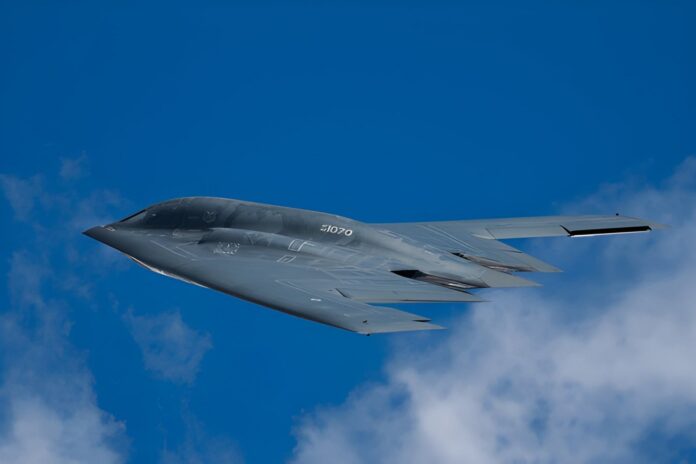
The U.S. Air Force has locked in a two-pilot crew for the B-21 Raider stealth bomber, rejecting a lone-pilot, push-button future in favor of human judgment and experience.
Story Snapshot
- The Department of the Air Force officially decided the B-21 Raider will fly with a **two-pilot crew**, not a single operator.
- Leaders say two pilots “optimally support” the bomber’s complex, long-range mission profile, including nuclear and conventional strikes.
- The crew setup mirrors the older B-2 Spirit, pairing a pilot with a mission commander who manages weapons, sensors, and countermeasures.
- A new transition program will move seasoned weapons and combat systems officers into pilot seats on the B-21.
Air Force Confirms Two-Pilot Crew For America’s New Stealth Bomber
The Department of the Air Force has now made it official: the B-21 Raider, America’s newest long-range stealth bomber, will fly with a **two-pilot crew** as it enters service. This decision ends speculation that the aircraft might rely on a single pilot backed by heavy automation. Instead, leaders chose a model that keeps two trained warriors in the cockpit during some of the most dangerous missions the United States can launch. For readers who value human judgment over blind software, this is a notable win.
According to the formal announcement, Air Force leadership reached the decision after a detailed review of the B-21’s advanced features and mission needs. Officials concluded that a two-pilot configuration “optimally supports the aircraft’s mission profile,” language that signals how demanding those missions will be. The Raider is built to fly deep into hostile airspace, evade the most advanced enemy defenses, and deliver either conventional or nuclear weapons if necessary. Doing all that for many hours at a time calls for shared workload, not a lone operator staring at screens.
How The B-21 Crew Will Work And Why It Matters
Military reporting notes that the B-21 will keep the same basic crew structure as the B-2 Spirit bomber, which also flies with two people on board. One is the pilot, focused on flying the aircraft and managing navigation. The second is the mission commander, who runs weapons, sensors, electronic countermeasures, and other mission systems while still being able to fly the plane if needed. This setup gives the United States two qualified voices in the cockpit when the stakes are highest, backing up the kind of crew teamwork that has saved lives in combat for decades.
Research on single-pilot operations in advanced jets has repeatedly warned about the risks of putting one person alone in charge of complex missions. Studies highlight problems with high workload, reduced monitoring, weaker situational awareness, and decisions that go unchallenged because no second expert is present to question them. For conservative readers who distrust tech-over-human thinking, the two-pilot choice fits common sense: when a bomber is carrying nuclear weapons or striking far from home, America should not gamble everything on one tired person and a stack of code written by contractors.
Protecting Human Experience In The Cockpit
The Air Force statement also explains a key talent move behind the decision: a new pilot transition program for selected weapons system officers and combat systems officers. These officers have spent years managing weapons, sensors, and complex missions from bomber and strike aircraft. Under the new plan, chosen officers will attend pilot training and then move into B-21 assignments. This path keeps deep tactical and combat experience inside the Raider community instead of shoving seasoned warriors aside in favor of fresh but less experienced pilots.
The announcement stresses that retaining this experience is “imperative” to maximize both lethality and survivability for the B-21. That language matters. It shows Air Force leaders are thinking about how to fight and win in “extended-duration, long-range strike missions in highly contested environments,” not just checking boxes for technology demos. Put simply, they are admitting that no amount of software can replace years of hard-earned human judgment when a mission goes sideways, a system fails, or an enemy does something unexpected.
Technology, Automation, And The Line We Should Not Cross
Defense commentary around the B-21 often highlights its heavy automation and even suggests the aircraft was designed to be “optionally manned,” able to fly as a powerful drone when needed. That concept raises serious questions about how far the military should go in removing humans from life-or-death decisions. The new crew policy draws a clear line for at least the Raider’s early service life: even with advanced software and unmanned options in the design, America’s frontline strategic bomber will launch with two human pilots on board.
B-21 RAIDERS TO HAVE TWO PILOTS
The USAF confirms the new B-21 Raider bomber will fly with a two-pilot crew—not just one—as it nears initial fielding next year. Strategic decisions shape next-gen bomber operations.https://t.co/d1dcymY1Tr
— SkyGlass by AVIAR Labs (@SkyGlass12) July 11, 2026
For readers worried about government overreach, this is still an area to watch closely. Automation in combat systems can be useful, but it can also invite unaccountable decision-making if machines start to replace humans at the most critical moment. The B-21 decision shows that, under the current administration, the Air Force is not ready to sideline pilots and mission commanders in favor of fully remote or single-pilot bombing runs. The United States is keeping experienced people in the cockpit of the bomber that may carry the most serious missions this nation will ever fly.
Sources:
realcleardefense.com, militarytimes.com, stripes.com, airforce-technology.com, af.mil, stratcom.mil, reddit.com