
Major broadcast networks refused to air President Trump’s live speech on election security, and he responded by saying their licenses should be stripped for shutting out the American people.
Story Snapshot
- ABC and NBC chose not to carry Trump’s primetime address on election security live, keeping regular shows instead.
- Trump blasted the networks as biased “fake news” and said their decision should lead to broadcast license revocation.
- The networks used past examples with Obama and Biden speeches to defend skipping live coverage.
- Federal law and the First Amendment make it very hard to yank licenses over news content, despite Trump’s demands.
Trump Slams Networks for Blocking His Election Security Message
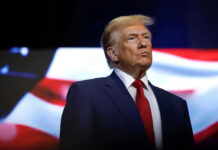
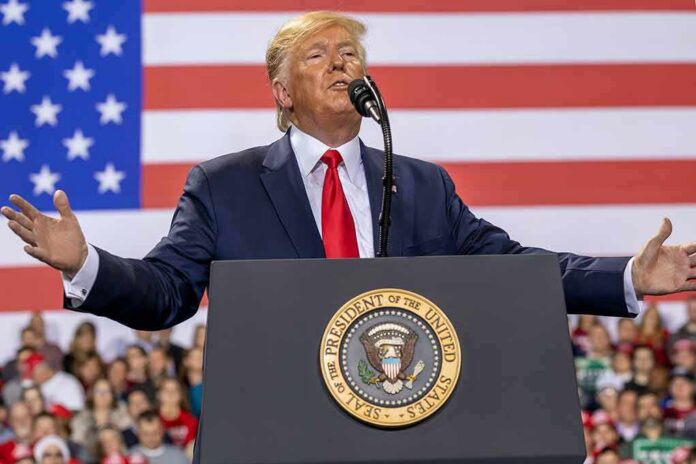
President Donald Trump delivered a primetime speech focused on election security and alleged fraud, but two of the biggest broadcast networks refused to air it live. ABC and NBC kept their regular entertainment lineups instead of interrupting with the address, while CBS and Fox did carry the speech on their main channels. During the speech itself, Trump turned their decision into part of his message, accusing the networks of hiding the truth about “corrupt” elections from the American people.
Trump told viewers that ABC and NBC “knew what the speech was about” and did not air it live because “they don’t like the topic” and “don’t want to reveal” election fraud he claims to have uncovered. He branded them “fake news” and said their refusal proved they were part of a wider effort in the media to protect the radical left. For many conservatives who already feel shut out by legacy media, this looked like one more example of powerful corporations deciding what information citizens are allowed to see.
License Revocation Threats Raise Constitutional Questions
In the same speech, Trump went beyond criticism and called for the Federal Communications Commission (FCC) to revoke ABC’s and NBC’s broadcast licenses for not carrying his address. He argued that “fraud like this should mean a revocation of their licenses” and complained that broadcasters “use our public, multi-billion-dollar-in-value airwaves for absolutely no money” while refusing to give him fair coverage. This fits a pattern: Trump has repeatedly said networks whose coverage is “97 percent negative” toward him should have their licenses “reconsidered” or “terminated.”
Trump has made similar threats for years when he believes networks distort the truth about his agenda. He previously urged license challenges after NBC reported his secretary of state called him a “moron,” saying partisan “fake news” “must be challenged and, if appropriate, revoked.” He also said NBC and CNN “should have their licenses or whatever permits they hold” taken away after they chose not to air his Iowa caucus victory speech. These remarks reflect his view that broadcasters holding government-granted access to public airwaves owe Americans fair, honest coverage or risk losing that privilege.
How Much Power Government Really Has Over Broadcast Licenses
Trump’s call to strip licenses hits many conservatives as common sense accountability, but the legal system makes this much harder than it sounds. Under federal communications law, the FCC licenses individual local stations, not national news divisions like “ABC News” or “NBC News.” Experts say the FCC cannot revoke a license just because a politician dislikes a particular newscast or programming decision, since the First Amendment protects news content from direct government punishment.
Even so, Trump’s pressure campaign is not just talk. Reports describe his allies at the FCC, including current chairman Brendan Carr, openly warning broadcasters that critical coverage of issues such as the war with Iran might affect future license renewals. Advocacy groups and legal scholars call this a form of viewpoint discrimination and a threat to press freedom, because it uses regulatory power to push news outlets toward one approved narrative. No president has yet succeeded in pulling a license purely over content, but repeated threats alone can chill reporters and editors who fear retaliation.
Networks Defend Decision Not to Air Trump’s Speech Live
While Trump framed ABC and NBC’s choice as part of a plot to hide election fraud, the networks pointed to past practice. Media analysts noted that not every presidential address gets automatic primetime broadcast coverage on all major networks, especially when it is not a formal State of the Union message. For example, some networks did not carry President Barack Obama’s 2014 immigration address or President Joe Biden’s 2022 “Battle for the Soul of the Nation” speech live on their main channels. Instead, they often rely on cable news or streaming to cover such events.
Critics of Trump argue that decisions about live coverage are editorial calls, not censorship, and that networks have a duty to avoid airing false claims about elections in real time. But many conservative viewers see a double standard: they recall years of wall-to-wall coverage for Democratic presidents while their own president must fight for airtime to discuss election integrity. That frustration is exactly what Trump tapped into when he told his supporters that “crooked journalism should not be rewarded, it should be terminated,” and that unfair coverage of Republicans should carry real consequences for those who hold broadcast licenses.
Sources:
mediaite.com, cnbc.com, politicalwire.com, nbcnews.com, time.com, youtube.com, brookings.edu, politico.com, thehill.com, reuters.com, internazionale.it, thedailybeast.com, bostonglobe.com, cnn.com, insidesources.com