

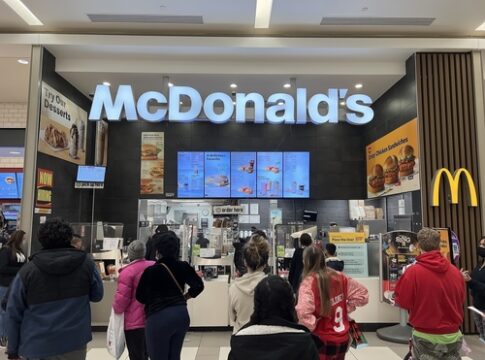
A McDonald’s franchise owner in Minneapolis sparked nationwide outrage when employees physically blocked federal ICE agents from entering the restaurant’s kitchen, creating a viral standoff that ended with corporate intervention and predictions of franchise termination.
The Sign That Started a Firestorm
The downtown Minneapolis McDonald’s sign read like a legal notice: ICE agents could not access non-public areas without a valid judicial warrant. What seemed like standard private property protection exploded into a national controversy when video emerged showing the policy in action. Restaurant staff physically prevented federal agents from entering the kitchen area, with employees calling the franchise owner mid-confrontation to confirm their authority to deny access.
The timing proved explosive. Minnesota remains on edge following the fatal shooting of Renee Good by ICE agent Jonathan Ross, creating a powder keg atmosphere around immigration enforcement. The McDonald’s incident became a lightning rod for broader frustrations about federal overreach versus private property rights.
Conservative Backlash Builds Momentum
Senator Ted Cruz led the charge on social media, posting “Outrageous. Is McDonalds OK with this brazen anti-law-enforcement bias?” The criticism snowballed as conservative commentators predicted a “Bud Light”-style boycott campaign. Megyn Kelly suggested escalating the matter to McDonald’s “most famous employee,” referring to Donald Trump, who famously worked a campaign photo opportunity at a Pennsylvania location.
The parallels to recent corporate-ICE conflicts were unmistakable. A Hampton Inn franchise in Minnesota faced termination from Hilton’s system after canceling ICE agent bookings following DHS criticism. Conservative voices immediately predicted similar consequences for the McDonald’s franchise owner, framing it as corporate accountability for anti-enforcement activism.
Corporate Damage Control and Legal Reality
McDonald’s corporate response came swiftly and decisively. The company confirmed the sign was posted “without approval” and had been removed, while the franchise owner received instructions to “reiterate expectations with their restaurant team regarding appropriate signage.” The carefully worded statement distanced corporate leadership from the franchise decision while maintaining plausible deniability about broader enforcement policies.
The legal foundation for the sign remains solid despite the political firestorm. Private businesses can legally restrict access to non-public areas without judicial warrants under Fourth Amendment protections against unreasonable searches. The franchise owner’s policy reflected standard trespassing law, but the execution amid heightened immigration tensions transformed routine property rights into political theater.
I guess my visits to Mickey Dee’s has just ended. If they can’t help protect the Nation then they won’t need my business.
Good for the McDonalds. If ICE goes in the kitchen they will arrest everyone who looks Hispanic whether they are citizens or not. Plus it is not sanitary to have unauthorized people in unsanitary clothing in a kitchen … Board of health would not be pleased
They do have the right to refuse entry to law enforcement, and all people supporting the Constitution have the right to choose a different place to get their food
I think that it’s terrible that our corporate entities have turned to politics and fence sitting. I chose to pare down fast food since the “dollar menu” disappeared.