

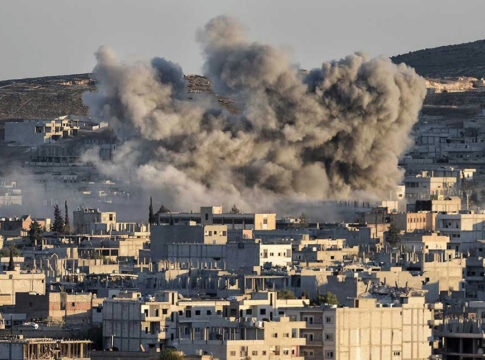
In the span of ten minutes on April 8, 2026, Israeli strikes killed over 350 people across Lebanon, leaving families with a grim choice: provide DNA samples to identify loved ones whose bodies were mangled beyond recognition.
The Devastation of Black Wednesday
What Beirut calls Black Wednesday unfolded with brutal precision. Within ten minutes on the afternoon of April 8, Israeli forces launched over one hundred strikes across Lebanon, targeting densely populated residential areas in Beirut, Nabatieh, and surrounding regions. The scale was unprecedented. Initial death tolls climbed from two hundred to three hundred fifty-seven as recovery teams cleared rubble and hospitals struggled to process the influx of wounded and deceased. The toll continues to climb as debris recovery remains incomplete.
When Bodies Tell No Stories
The strikes were so powerful they rendered conventional identification impossible. Families arriving at hospitals found themselves staring at remains so fragmented that visual recognition became meaningless. Dr. Fatahallah Fattouh, an emergency physician at the frontlines of this crisis, emphasized the grim reality: deformed remains could only be handed to families after DNA confirmation. The hospital activated emergency protocols, triaging patients and managing the surge with trained staff working in shifts. Yet even these measures proved insufficient against the scale of devastation.
Forensic specialists like Dr. Afif Khafaja developed an identification process matching samples extracted from body tissue—muscles, teeth, bones—against family blood and hair samples. The process typically took five days. By mid-April, eight families had provided samples, with one match confirmed and nineteen sets of remains identified as belonging to twelve people. The numbers reveal the horrific arithmetic of the strikes: multiple bodies so fragmented they belonged to fewer individuals than initial counts suggested.
The Machinery of Grief
The Lebanese Health Ministry and Internal Security Forces established a grim bureaucracy around loss. Families received calls directing them to forensic offices between eight in the morning and three in the afternoon, instructed to bring two relatives with identification documents. The Ministry noted it possessed “large quantities of remains” requiring DNA analysis, a clinical phrase masking the scale of human fragmentation. The Lebanese Red Cross documented eighteen missing persons, including at least one child, their fates unknown as of mid-April.
Morgues transformed into makeshift laboratories. Remains stored in refrigerated units lined the corridors of Rafic Hariri University Hospital and the American University of Beirut Hospital. The facilities, designed for manageable caseloads, buckled under the weight of industrial-scale death. Families traveled long distances, some crossing borders into Syria to provide samples, driven by the desperate hope that DNA might restore identity to the unidentifiable.
A Conflict Escalates, Families Fracture
The April 8 strikes represented a major escalation in Israel-Hezbollah tensions that had simmered since October 2023. Prior cross-border exchanges paled beside this coordinated assault. The attack occurred during ongoing conflict but triggered an unexpected diplomatic response: Lebanon initiated historic direct talks with Israel aimed at achieving a ceasefire. Whether those talks will hold remains uncertain, but the human cost has already been calculated in refrigerated units and DNA samples.
Israel’s “Black Wednesday” Massacre Leaves Lebanese Families Giving DNA to ID Loved Ones’ Remains https://t.co/VbduLDXPVB
— Joe Catron (@jncatron) April 17, 2026
The crisis exposed the vulnerability of civilian populations caught between military powers. One-third of the dead were children and elderly—those least equipped to survive such violence. Families in Nabatieh, Beirut, and across Lebanon now navigate a system designed to restore names to remains, to transform fragmented tissue back into identifiable loved ones. It is a process that speaks to both human resilience and human tragedy, where science becomes the only bridge between the living and the dead.
Sources:
DNA testing last resort for Lebanese seeking fate of relatives targeted in Israeli strikes
Families search for missing after Israel massacre in Lebanon
“The crisis exposed the vulnerability of civilian populations caught between military powers”. Let’s be precise. the problem is the Lebanese “government” is actually a terrorist group (Hezbollah) dedicated to the elimination of Israel and is not that concerned about the Lebanese civilians. If they stopped their terrorism there would be no more civilian killing on either side. Get it right please.