
When a former President and a big-city mayor team up to sing nursery rhymes with preschoolers, you’d think it would be heartwarming—but the internet had other ideas about what happened in the Bronx.
When Political Theater Meets Preschool
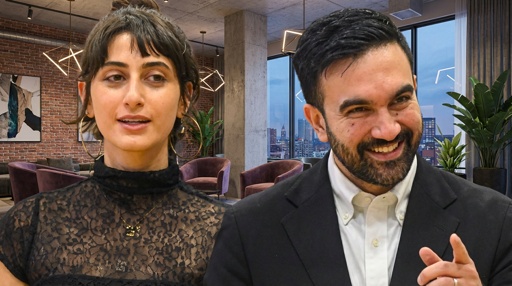
Barack Obama arrived at a Bronx preschool on a Saturday morning in April for what should have been a routine community visit. He met Zohran Mamdani, New York City’s mayor, for the first time in front of cameras and curious four-year-olds. The setting was carefully chosen—a child care facility that represented both Obama’s post-presidency focus on education and Mamdani’s mayoral emphasis on early childhood programs. What transpired next became a masterclass in how good intentions can collide spectacularly with modern social media dynamics.
The two politicians settled in with the preschoolers and launched into “Wheels on the Bus,” complete with hand motions and exaggerated enthusiasm. AP videographer Ted Shaffrey captured every moment, including what the footage notes as laughter at the 102-second mark. The video quality was professional, the setting was authentic, and the children appeared engaged. Yet something about the performance struck viewers as deeply uncomfortable—a disconnect between the staged nature of political photo opportunities and the spontaneous world of preschool singalongs.
The Anatomy of Political Awkwardness
The internet’s reaction was swift and merciless. Videos circulated with descriptions emphasizing the “cringe” factor, a term that has become shorthand for secondhand embarrassment in the social media age. The criticism wasn’t about the song choice or the children’s response—it centered on what many perceived as forced authenticity. Two powerful political figures, one a former leader of the free world, the other running America’s largest city, seemed to be trying too hard to appear relatable. The performance felt calculated rather than genuine, choreographed rather than spontaneous.
This perception matters more than the reality of the event itself. Obama has participated in similar children’s events throughout and after his presidency without generating such mockery. Mamdani, as a newer figure on the national stage, was using the appearance to boost his visibility and align himself with Democratic Party royalty. The first-time meeting between the two added another layer—this wasn’t a relationship built on years of collaboration but rather a manufactured moment designed for cameras and constituent consumption.
What This Reveals About Modern Politics
The viral spread of these videos illuminates a broader truth about contemporary political communication. Voters, particularly those skeptical of progressive politics, have developed finely tuned detectors for inauthenticity. When politicians engage in activities that seem designed primarily for optics rather than substance, audiences notice. The disconnect becomes especially pronounced when the activity involves children, who naturally resist the scripted nature of political events. Preschoolers don’t care about polling numbers or national profiles—they just want to sing about buses.
The political calculation behind the event was transparent. Obama lends his still-considerable influence to a rising Democratic mayor in a city facing significant governance challenges. Mamdani gains credibility through association and national media attention. The child care center receives a spotlight that might translate into policy support or funding. Everyone involved had rational reasons for participation. Yet the sum of these rational parts produced something that felt hollow to observers, a pantomime of caring that substituted performance for genuine engagement with the community’s needs.
The Lasting Impact of Viral Moments
Short-term mockery aside, this event serves Mamdani’s goals more than it harms them. Name recognition matters in politics, and viral moments—even negative ones—build awareness. Conservative critics will cite this as another example of Democratic politicians engaging in superficial gestures while cities face real problems. Progressive supporters will dismiss the criticism as cynical attacks on community outreach. The children at the center remain props in a larger political narrative, their actual educational needs secondary to the spectacle.
The Big Cringe: Obama and Mamdani Sing to Kids, and It's Even Worse Than You Thinkhttps://t.co/pIZW3TDiGY
— RedState (@RedState) April 19, 2026
The absence of substantive policy discussion around the event reveals its true nature. No announcements about expanded child care funding accompanied the visit. No concrete proposals emerged from the interaction. The event existed primarily to be photographed and filmed, to generate content that could be deployed in future campaigns and endorsements. That this strategy backfired in the court of public opinion doesn’t change its underlying purpose. It simply demonstrates that voters across the political spectrum have grown weary of politicians who treat governance as an extended audition for viral moments rather than serious work addressing serious problems.