
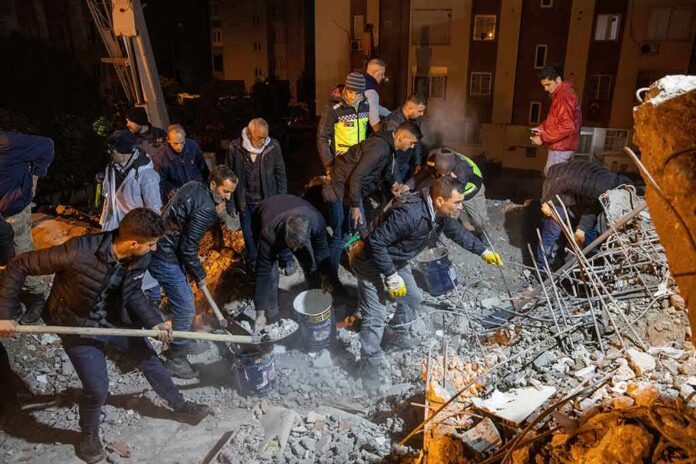
Dashcam video shows the exact moment a Brooklyn apartment building crumbled, killing eight people as investigators probe nearby construction.
Story Highlights
- Dashcam footage captured the fatal collapse at 1321 Flatbush Avenue that killed eight, including two children.
- Brooklyn District Attorney Eric Gonzalez opened a criminal investigation into the cause.
- City officials issued a full stop-work order at the adjacent excavation site with an active permit.
- Engineering records flagged risks from excavation and advised monitoring, but causation is not yet determined.
Dashcam Confirms Tragic Collapse and Ongoing Probe
Newly surfaced dashcam video captured the deadly collapse of 1321 Flatbush Avenue in Brooklyn, where eight people died, including two children, and many others were injured. Reporters on scene said rescue operations ended after days of work, while families began to grieve and seek answers. The Brooklyn District Attorney, Eric Gonzalez, launched a criminal investigation into what caused the failure and who may be responsible. Officials emphasized that investigators have not yet determined a specific cause.
City inspectors also focused on the active construction site next door, where crews had been digging under an approved permit for excavation and foundation work. The New York City Department of Buildings issued a full stop-work order at that site while structural and forensic teams examined both properties. Authorities are collecting records, video, and engineering documents to map the collapse sequence. Investigators will compare approved plans to what was built in the field to see if support lagged behind excavation.
Engineering Records Flagged Excavation Risks and Monitoring
Construction records reviewed by trade press show a geotechnical report warned that excavation could affect adjoining buildings and said neighbors by the property line would require underpinning or other support. The report recommended crack, movement, and vibration monitoring to track any shift as soil was removed. Editors who examined those records stressed they do not prove what caused the collapse. City leaders likewise said they have not concluded whether excavation or support work played a role.
Separate reporting highlighted a paperwork clash between the soil report’s call for underpinning and approved plans that used “benching,” or stepped excavation. The Department of Buildings said the approved plans met code and that benching is a standard method in the industry. Those records, while important, do not confirm the exact depth, sequence, or site conditions right before failure. Investigators will need field logs, inspections, and instrument readings to resolve those gaps.
Wider Checks, Accountability, and Public Safety Priorities
City officials expanded their review beyond the single lot. They linked companies tied to the project to scores of other sites, then launched sweeps to inspect and, where needed, stop work until safety could be verified. Some accounts put the network at roughly one hundred to one hundred sixty related locations, signaling a broad push to test whether similar risks exist elsewhere. The scale of this follow-up reflects the gravity of eight deaths and the duty to prevent a repeat.
For families, the core concern is accountability. Prosecutors can subpoena records and take sworn testimony to determine whether design, means and methods, or oversight failed. City regulators can release the complete permit files, review comments, and inspection notes so the public sees what was planned and what was checked. Transparent files and clear timelines will help separate rumor from fact and show whether basic safeguards, like monitoring and timely shoring, were in place when it mattered.
What Conservative Readers Should Watch Next
Law and order demands that everyone follow the rules, from landlords to contractors to city regulators. New York officials reported that they had not identified a final cause, but they confirmed a stop-work order and a criminal probe, which are the right first steps. The next test is speed and honesty. Full document releases, plain-language briefings, and visible enforcement at linked sites will show whether the system protects working families or only reacts after lives are lost.
New video from MTA bus shows moments of Brooklyn building collapse https://t.co/ixjq6EDIGv pic.twitter.com/OcfKjhYgPX
— Eyewitness News (@ABC7NY) November 20, 2026
Property rights also come with the duty not to harm your neighbor. Excavation beside an occupied building is high risk, and records say engineers flagged that risk ahead of time. If monitors were skipped, or if approved safeguards lagged the dig, that choice matters. If the collapse traced to hidden defects in the older building, that matters too. The facts will set the verdict. For now, the dashcam reminds us why rules exist and why they must be enforced without excuses.
Sources:
brooklynpaper.com, cbsnews.com, sacbee.com, bulwark.nyc, enr.com, curbed.com, abc7ny.com