
Federal investigators moved to preserve specific Alaska ballots after warning that two “Dan Sullivans” on one ballot could mislead voters and taint the result.
Story Highlights
- The Department of Justice sought to segregate ballots ranking Daniel J. Sullivan to test for voter confusion.
- A media report said 12 sources, texts, and documents tied Democratic allies to promoting the second Sullivan.
- A judge later dismissed the federal lawsuit seeking to block certification, though the probe continues.
- Reports say more than 200 subpoenas went out in the criminal investigation.
Federal Action Focused on Possible Voter Confusion
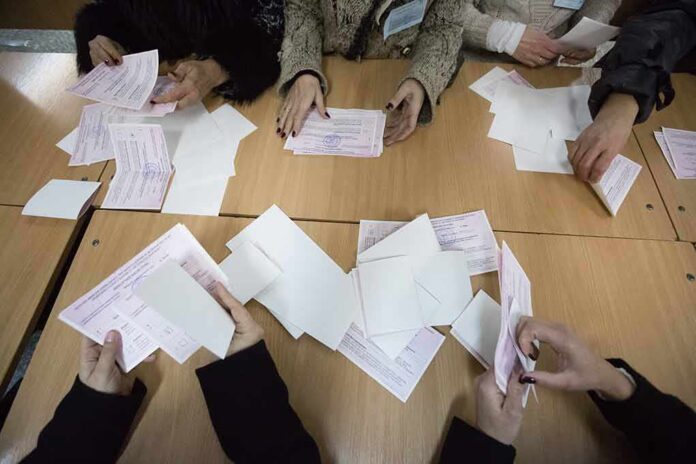
The Department of Justice asked a federal court to preserve and separate ballots ranking Daniel J. Sullivan before Election Day. The filing warned that having two candidates with the same well-known name created a risk of misleading voters. The aim was to measure whether any rankings for the retired teacher were actually meant for incumbent Senator Dan Sullivan. The request targeted only those ballots to test confusion and protect election integrity if the margin proved tight.
Justice Department lawyers also argued that confusion, if proven, could affect certification. The case sought a process to evaluate ballots without exposing voter choices at large. Officials said the risk was specific and testable because it centered on one candidate’s name. Reporters later noted that the government’s interest started months before the press furor, showing the probe did not rely only on campaign spin or social media noise.
Alleged Recruitment And What Reporters Found
ABC News reported that The New York Times based its account on 12 sources, text messages, and documents. The materials allegedly linked Democratic Senator Mary Peltola’s campaign circle, her lawyers, and senior Democratic Senate campaign staff to encouraging Daniel J. Sullivan to run. The reported theory was simple: place a second “Dan Sullivan” on the ballot and siphon votes from the incumbent through name recognition in a ranked-choice system. The report did not claim proof that Peltola herself ordered it.
Legal analysts said recruiting a candidate for strategic reasons can be lawful unless it crosses lines like payments or fraud. That is why the question of voter confusion matters so much. If voters were misled about whom they selected, the conduct could raise different legal issues than bare-knuckle politics. So far, public reports do not show proof of a payment to Daniel J. Sullivan or a clear campaign-finance violation, which keeps the legal stakes focused on deception and process integrity.
Court Rulings, Ongoing Probe, And What Comes Next
Courts set guardrails as events moved fast. The Alaska Supreme Court kept Daniel J. Sullivan on the ballot earlier in the year, after state officials tried to remove him as a sham candidate. A federal judge later dismissed the lawsuit that sought to block certification, undercutting efforts to stop the count in real time. Those rulings did not end the criminal investigation, but they narrowed what courts would do before facts are fully known.
Investigative activity continued even after the civil setback. The Washington Examiner reported that the Department of Justice issued more than 200 subpoenas in the criminal probe. That scope signals that investigators are pressing to learn who planned what, who knew, and whether voters were actually confused. The volume also invites claims of overreach. But the number suggests the government believes material facts remain to be nailed down and tested against the law.
Denials, Open Questions, And The Standard For Integrity
Daniel J. Sullivan denied that Democrats recruited him and said he ran because he opposes the incumbent’s policies. The Peltola campaign and the Democratic Senatorial Campaign Committee also denied any recruitment role. Those denials stand against a media account that cites multiple sources and documents. The key gap is direct proof tying Peltola herself to the plan. That keeps the focus on staff actions, lawyer roles, and whether any lines of law were crossed or voters were misled.
For weeks, Trump has claimed that the presence of two Dan Sullivans on the ballot undermined the integrity of Alaska’s Senate race.
But in the end, it was a different Alaska contest that was disrupted by a spoiler candidate — to the benefit of the GOP. https://t.co/T5wuXEYW9t
— Marc E. Elias (@marceelias) November 19, 2026
Conservatives should separate three questions with clear eyes. First, was a second Sullivan encouraged to run for political gain? Second, was any act unlawful, like a payment or a scheme to trick voters? Third, did voters actually get confused in numbers that could change the result? The Department of Justice’s ballot preservation request targeted that third question. Alaskans deserve a clean count and the truth. Federal investigators, state leaders, and the courts must deliver both without delay.
Sources:
govinfo.gov, alaskasnewssource.com, kpbs.org, upr.org, washingtonexaminer.com