

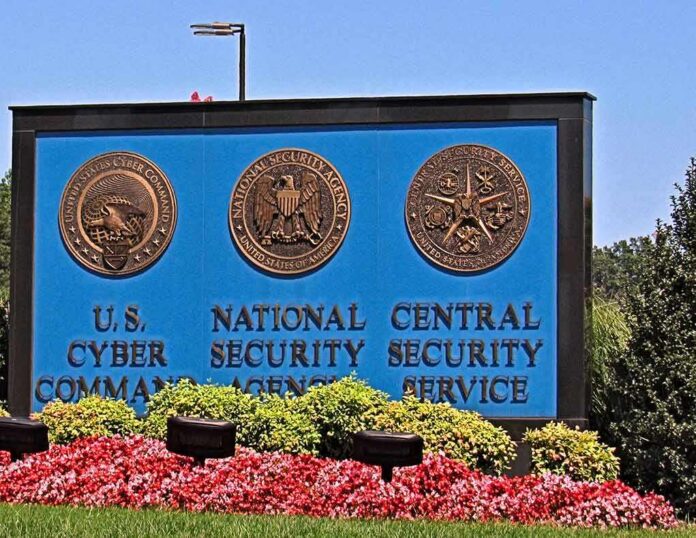
A classified National Security Agency communications network went down, disrupting work at its Georgia hub that supports Middle East operations.
Story Snapshot
- NSA’s internal classified network was taken offline during maintenance, affecting internal systems.
- Georgia’s Fort Gordon cryptologic center was impacted, with some staff working from home.
- Teams in Georgia temporarily could not use the network to reach colleagues deployed in the region.
- NSA said mission-critical capabilities stayed operational during the disruption.
What Went Down And Where It Hit
The National Security Agency confirmed that an internal classified communications system suffered a temporary degradation during scheduled maintenance. Reporting identified the affected system as the agency’s classified internal network used to exchange messages among personnel. The Washington Post reported the system was out of commission, while the Associated Press quoted the agency describing the event as “routine maintenance” that affected some internal systems. An outlet focused on Georgia echoed the same NSA statement acknowledging impacts but asserting ongoing core operations.
CNN reported that the outage reached the agency’s large Georgia footprint at Fort Gordon, a site that supports signals intelligence and cybersecurity work focused on the Middle East. Sources familiar with operations said the Georgia location lost normal access to the classified internal network used for coordination, while alternative channels stayed available. That meant teams had to shift to backups and workarounds to keep information flowing during the disruption window.
Operational Impact On Georgia’s Mission
Officials in Georgia temporarily could not use the classified internal network to communicate with colleagues deployed across the region, according to reporting. Backup systems and alternate procedures were used to reduce the impact. CNN added that large portions of the workforce worked from home for two days as the agency managed the disruption and arrival times slipped at other locations, including headquarters, per separate reporting. These steps suggest a real operational speed bump even as core collection and top-priority tasks continued.
The National Security Agency stated that mission-critical capabilities stayed fully operational during the maintenance event, underscoring layered redundancy. The agency said its infrastructure is designed with multiple backups to maintain operations during maintenance or unexpected events. That framing matches how complex government technology often behaves when patches or changes are applied: continuity for key missions with slowdowns elsewhere until the primary system returns to normal.
Cause, Duration, And The Bigger Read
Public reporting points to maintenance or update activity as the trigger. The Washington Post described an internal communications system going down, while the Associated Press relayed the agency’s “routine maintenance” explanation. Other outlets cited sources linking the disruption to software updates, but the agency has not released a root-cause report in public. The available record does not point to a cyberattack, and officials said the event did not appear to be one, according to coverage of the incident.
A multi-day technical outage affecting the National Security Agency's classified internal communications network, NSANet, has disrupted operations at NSA Georgia (NSAG) at Fort Gordon, impacting signals intelligence and cybersecurity work tied to the U.S. conflict with Iran. pic.twitter.com/QNsDPs2veJ
— Alma Gentil (@Chinoy200096633) November 19, 2026
The clearest takeaway for readers is about resilience. The Georgia hub faced a real constraint when the internal network went offline, and managers leaned on backups, remote work, and alternate channels to keep the mission steady. That fits a common pattern with large government systems: upgrades or patches can trigger side effects, but redundancy keeps the most vital tasks running. The report shows a disruption worth attention without signaling a collapse of intelligence support to forward teams.
Sources:
thegatewaypundit.com, cnn.com, app.jpost.com, raydn.us