

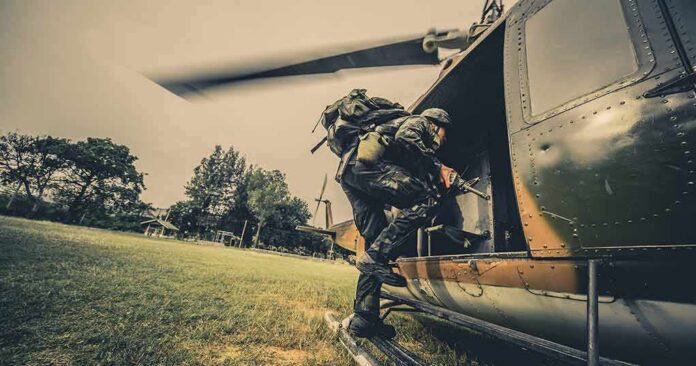
Against all odds and strict flight rules, combat aviator John Alvarez returned to military flying just 361 days after losing his leg in a helicopter crash.
Story Highlights
- A Navy exchange pilot crashed in Ecuador in 1996, lost a leg, and returned to fly in 1997.
- Doctors, commanders, and flight surgeons used the waiver system to clear him for duty.
- Air Force Special Operations Command documented his re-qualification flight about one year later.
- His case shows how standards stay tough while allowing proven warriors to keep serving.
What Happened: Crash, Amputation, And A Swift Return To Flight
Military reporting says Navy aviator John Alvarez crashed during a counter-drug mission in Ecuador on Sept. 19, 1996. The wreck killed the pilot, badly injured Alvarez, and led to amputation of one leg. On Sept. 5, 1997, he strapped back into a military helicopter and flew again. The outlet framed his return as “361 days later,” noting he had been grounded since the crash and cleared to fly the day before.
United States Air Force Special Operations Command features describe Alvarez as the first Navy lieutenant amputee returned to flight in that community. The command noted he received a specialized prosthesis to work the controls. He then completed a re-qualification flight roughly one year after the crash. That timeline matches the independent report of his Sept. 5, 1997 return to the cockpit, underscoring a careful, step-by-step process to certify safety and skill.
How The Waiver System Works: Rigid Standards, Real-World Flexibility
Department of the Air Force medical rules state that when a condition fails to meet flight standards, a waiver can allow flying if risk is controlled and the member can do the job. This process requires medical exams, command review, and sign-off by the proper authority. The goal is safety and mission success, not box-checking. Alvarez’s case fits that model: strict rules, hard proof of ability, and a tailored waiver so a trained pilot could still serve.
Service manuals and guides show a similar approach across branches. The United States Navy’s Aeromedical Reference and Waiver Guide explains that waivers rest on risk assessment and mission needs. The system is designed to keep standards high while leaving room for rare, well-documented exceptions. Alvarez’s path shows the balance in practice: life-changing injury, tough rehab, testing, and then a return only after the chain of authority judged he met both safety and mission demands.
Why This Matters: Valor, Accountability, And Keeping America Ready
Patriots know that readiness starts with people who will not quit. Alvarez’s return reflects a culture that rewards grit and results, not slogans. Commanders did not weaken standards. They used an established process to keep a proven warrior in the fight. That is how a serious military should work—set the bar high, measure performance, and keep talent when it still serves the mission and the nation’s security interests.
Conservatives can draw two key lessons. First, real equality means equal stakes and equal standards. Alvarez met them. Second, government works best when policy empowers leaders to make case-by-case calls rooted in safety and mission. No social fads. No shortcuts. Just evidence, accountability, and the courage to let a capable American continue to serve. His story is not policy theater—it is proof that discipline and freedom can live in the same cockpit.
Sources:
military.com, newsbreak.com, dutystation.ai, afsoc.af.mil