

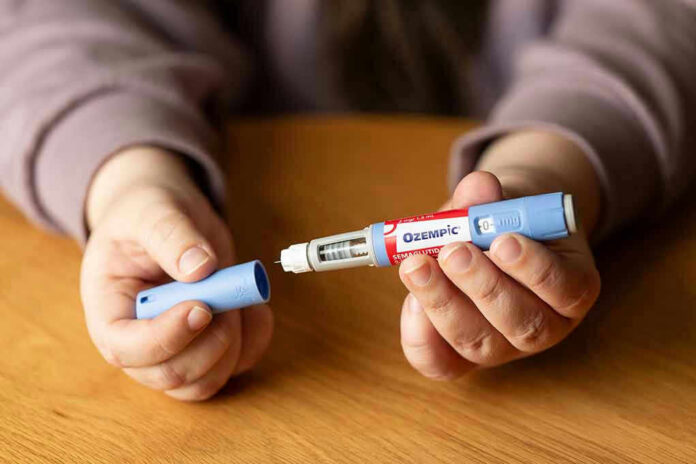
Ozempic-style drugs may be doing more than curbing appetite. New research points to a specific brain circuit that can dampen cravings for alcohol and other rewards.
Quick Take
- Researchers identified the lateral septum as a likely brain site tied to GLP-1 craving effects.
- In rodents, activating GLP-1 receptors in that region lowered alcohol intake without reducing food or water use.
- The findings connect appetite drugs to the brain’s reward system, not just the stomach.
- Human reports and early studies suggest broader craving effects, but the strongest proof here is still preclinical.
A brain region tied to craving
A peer-reviewed rodent study found that activating glucagon-like peptide-1 receptors in the lateral septum reduced alcohol intake and blunted alcohol reward signaling. The same work found that blocking those receptors had the opposite effect, which strengthens the case that this brain area helps control reward-driven drinking. For readers used to hearing about Ozempic only as a weight-loss drug, the bigger story is that it may also touch the brain circuits that drive craving.
That matters because the public discussion around these medicines has already moved beyond food. Reporting and expert commentary say GLP-1 drugs are being studied for effects on alcohol, nicotine, opioids, and other compulsive behaviors. The new animal data do not prove a cure for addiction. They do, however, give researchers a clearer map of where these drugs may act inside the brain.
What the study actually showed
The rodent paper is specific, and that precision matters. When researchers infused the GLP-1 agonist exendin-4 into the lateral septum, alcohol intake fell in a dose-dependent way, but food and water intake did not change. That suggests the effect was not just general sickness or reduced appetite. The authors concluded that lateral septum GLP-1 signaling weakens alcohol’s reward value and reduces dopamine release linked to drinking.
That kind of result fits a larger pattern in obesity and addiction research. GLP-1 drugs seem to act in several brain regions tied to motivation and reward, not only in areas that control hunger. Scientists and medical writers have described the same class of drugs as turning down “food noise” and, in some cases, reducing interest in alcohol and other substances. The lateral septum may be one more piece of that circuit.
Why the finding is getting so much attention
The attention comes from what the finding could mean for treatment. If a single brain pathway helps explain why GLP-1 drugs reduce cravings, doctors may one day use that knowledge to target alcohol use disorder or other compulsive behaviors more directly. That possibility has obvious appeal in a country still dealing with addiction, obesity, and the costs of chronic health problems. It also fits a common-sense view: fix the biology, not just the symptoms.
Still, the limits are real. The strongest evidence in this story comes from mice and rats, not people. Some human reports already describe lower cravings and less drinking, and a few early clinical discussions point in the same direction. But the brain mechanism is not fully proven in humans yet, and no responsible reader should treat a rodent circuit study as the final word on addiction treatment.
Ozempic Could Fight Addiction Too – Scientists Finally Know How | Robert Munn, SciTechDaily
A brain region tied to memory and reward may explain how GLP-1 drugs reduce cravings.
For many people, imagining a juicy burger or a cold glass of beer is enough to spark a craving and… pic.twitter.com/KNCly7m1as
— Owen Gregorian (@OwenGregorian) August 10, 2026
Even so, the research gives Ozempic and related drugs a much bigger frame than simple weight loss. It suggests these medicines may quiet reward signals deep in the brain, including in a region now being watched closely for its role in craving. For conservatives frustrated by a health system that often treats symptoms while ignoring root causes, that shift toward brain-based treatment is worth watching carefully.
Sources:
sciencedaily.com, scitechdaily.com, healthrx.com, rethinkpeptides.com, boltpharmacy.co.uk, artisanofbeauty.com, cyfrowa.rp.pl, pmc.ncbi.nlm.nih.gov, scientificamerican.com, abc.net.au, fellahealth.com, trimrx.com