

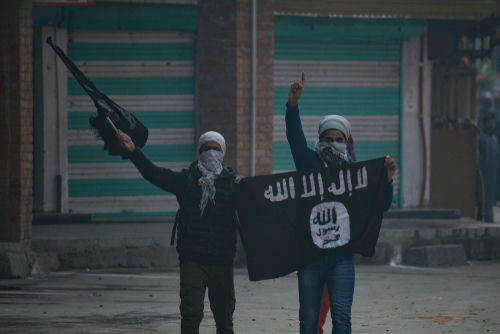
Jihadist propagandists are not just shouting into the void online; they are exporting a ready-made script that some Western attackers have followed almost line for line.
Story Snapshot
- Jihadist media is crafted as a global psychological operation, not random ranting.
- Messages are tailored to Western grievances, from alienation to foreign-policy anger.
- Evidence shows propaganda can inspire and instruct attacks, but rarely acts alone.
- Confusing propaganda with mind control leads to weak policy and missed threats.
How Jihadist Propaganda Became A Global Weapons System
Islamic State media strategists talk about propaganda the way a Pentagon planner talks about air power: as a force multiplier that stretches limited manpower and territory into global impact. A prominent lecture on jihadist information warfare describes how Islamic State messaging seeks to “shake perceptions,” polarize audiences, and frame every conflict through hard “us versus them” identity lenses.[1] Instead of just boasting, these campaigns pair narratives with explicit calls for attacks in the West and even step‑by‑step instructional content.[1][4]
Researchers who track global jihadism emphasize that this is not improvisation; it is strategic communication management.[6][8] Groups like Islamic State and al‑Qaeda central long ago learned to synchronize battlefield operations, online videos, and glossy magazines as one continuous feedback loop.[4][6] A spectacular attack yields dramatic footage, which then feeds recruitment clips, which then encourage sympathizers in Europe or North America to strike at home rather than trying to reach a faraway battlefield.[4][8]
From Remote War Zone To Laptop In London Or Ohio
Europol’s review of online jihadist propaganda in 2022 shows how carefully these messages are translated and localized for different audiences, including Western languages.[3] Islamic State and its supporters now rely on multilingual and translation outlets, blockchain video platforms, and even experiments with non‑fungible tokens to keep their content online despite platform crackdowns.[3] The point is not just survivability; it is reach. A teenager in a European suburb can consume the same “global jihad” storyline as a fighter in Nigeria or Syria, framed as defense of oppressed Muslims worldwide.[3][4]
U.S. and European analysts have documented how these narratives then hook into local grievances. West Point’s study on minors in jihadist plots notes that much of the content shared among young supporters is made by peers, remixing official Islamic State themes with local slang, local insults, and local anger.[2] That mix of high‑gloss battlefield imagery and neighborhood‑level memes creates a sense of belonging, adventure, and moral license that can be especially potent for socially isolated youth.[2][7]
When Inspiration Crosses The Line Into Instruction
For all the cinematic flair, the most alarming segment of the propaganda ecosystem is the operational material: justified how‑to guidance wrapped in theological argument. The West Point information warfare lecture underlines that Islamic State used its magazines and videos to circulate tactical advice on attacks in the West, confident that a small subset of viewers would emulate those methods.[1] Brookings research tracing the evolution of al‑Qaeda and Islamic State media shows a clear progression from abstract doctrine to concrete do‑it‑yourself terror manuals.[4]
In the United States, research by the Center for Strategic and International Studies (CSIS) highlights how the sermons and writings of Anwar al‑Awlaki became a recurring reference point in domestic jihadist cases.[5] About a quarter of U.S. jihadist cases since 2007 explicitly cited al‑Awlaki, whether through his English‑language lectures or his role in promoting the bomb‑making magazine Inspire.[5] Yet CSIS also cautions that the exact degree to which those materials caused specific attacks is “extremely difficult to discern,” because radicalization pathways involve multiple personal, social, and ideological factors.[5]
The Conservative Reality Check: Propaganda Matters, But People Still Have Agency
A temptation in public debate is to treat jihadist propaganda as either magic mind control or as harmless noise; both extremes are wrong and unhelpful. Conservative common sense starts with personal responsibility: people choose whether to act on ideas. The available research supports a middle position. Europol describes jihadist propaganda as capitalizing on geopolitical events and local frustrations to advance a vision of global jihad, but it stops short of claiming it single‑handedly causes attacks.[3]
10b)Spain w/help of FBI arrested IS jihadist (18) in Tarifa(Cádiz)on May 11,2026:
-convert
-advanced stage of radicalization due to intense consume of ISIS propaganda: spread it
-planned short-term attack
-obsession with attacks in Europe,esp in Nice
-hatred of Spain
-recruitment pic.twitter.com/zaq8WO68Wk— Mila (@Milatrud11) May 23, 2026
The Marshall Center’s work on jihadist strategic communication reinforces that the online space is an enabling environment, not a puppet theater.[6] Jihadist communicators use the internet to coordinate narratives, maintain brand identity, and keep dispersed networks aligned.[6][8] Yet the same reports admit the evidence trail from “video watched” to “bomb built” is thin, because device data, chat logs, and sealed court records are rarely fully accessible.[6][9] That evidentiary fog should make policymakers cautious about sweeping claims and one‑size‑fits‑all censorship fixes.
Why Lone Wolves Make Propaganda So Dangerous
While propaganda is not a singular cause, the rise of lone‑actor terrorism makes it a more dangerous accelerant. The Global Terrorism Index reports that lone actors account for more than ninety percent of fatal terrorist attacks in the West in recent years, with many suspects radicalizing via social media, gaming, and encrypted apps instead of physical mosques or training camps. DigitalCommons research on jihadist attacks in the West from 2014 to 2022 likewise shows a pattern of small cells and individuals acting without direct organizational orders but within a shared ideological script.[2]
That script is exactly what the propaganda delivers: a story in which Western governments are waging a crusade against Islam, where local feelings of humiliation or discrimination prove that story, and where violent “defensive” action becomes the heroic response.[1][3][7] For some individuals, that narrative simply fuels online posturing. For a smaller subset, especially those with personal crises, criminal histories, or mental‑health struggles, it offers a framework that can turn private rage into public violence.[2][6]
What A Serious Policy Response Should Focus On
Because evidence of direct causation is limited, the smarter course is not to pretend we can erase ideas from the internet, but to harden the points where ideas translate into action. That means better monitoring of closed propaganda channels by law enforcement, faster sharing of threat indicators across agencies, and rigorous case‑file analysis to identify recurring online‑to‑offline patterns.[5][9] It also means investing in counter‑narratives that speak credibly to disaffected youth, rather than outsourcing that job to generic “community partners.”[6][7]
For conservatives concerned with both security and liberty, the key is targeted disruption of violent networks, not broad speech policing. Jihadist propagandists are exporting a script designed to turn Western freedoms against Western societies.[1][4][6] The task is not to censor our way out of the problem, but to understand that script, expose it, and block those who would weaponize it before they move from consuming instructions on a screen to testing them on a city street.
Sources:
[1] Web – Exporting Jihad: Instructions and Propaganda Driving Attacks in the …
[2] YouTube – Information Warfare in the 21st century: The Media Jihad
[3] Web – Generation Jihad: The Profile and Modus Operandi of Minors …
[4] Web – [PDF] Online Jihadist Propaganda – 2022 in review – Europol
[5] Web – [PDF] Here to stay and growing: Combating ISIS propaganda networks
[6] Web – Jihadist Terrorism in the United States – CSIS
[7] Web – Jihadist Terrorist Use of Strategic Communication Management …
[8] Web – [PDF] Researching Jihadist Propaganda:
[9] Web – Global Jihadism | Program on Extremism