
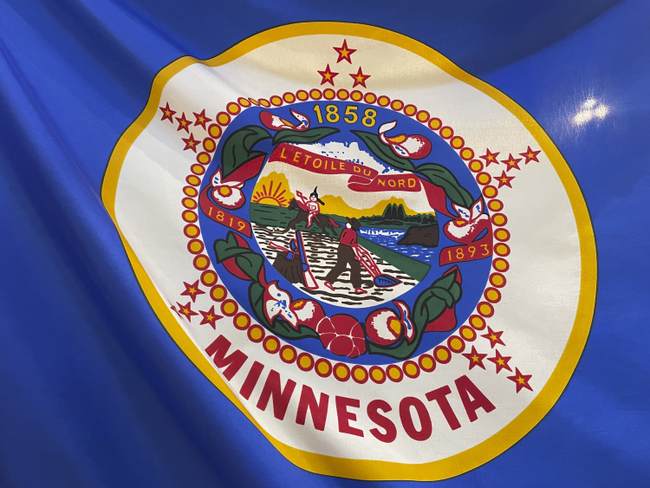
Minnesota Democrats introduced legislation Monday to financially penalize cities and counties that refuse to fly the state’s redesigned flag, threatening to cut state aid to municipalities that display the original 1893 banner instead of the 2023 replacement.
Democrats Target Defiant Cities
The proposed bill would reduce state funding for any municipality that flies or uses a flag other than the design certified by the State Emblems Redesign Commission. Five cities—Elk River, Champlin, Zumbrota, Plainview, and Inver Grove Heights—have already returned to flying the original flag since its 2023 replacement. Democratic-Farmer-Labor party members sponsoring the legislation aim to enforce compliance starting in 2027, potentially impacting essential services like police and fire departments in smaller communities with populations under 25,000.
On the same day Democrats introduced the punishment bill, Inver Grove Heights City Council voted to join the flag rebellion. Republican House Speaker Lisa Demuth called the proposal dead on arrival, stating that Democrats are attempting to take funding away from police and fire departments instead of addressing real issues affecting Minnesotans. The original flag depicted a Native American on horseback and a white settler farming, imagery critics claimed suggested Indigenous defeat and displacement.
Minnesota Democrats just introduced a bill to cut state aid to any city or county that dares to fly the original state flag.
For 67+ years: the historic flag with the farmer, North Star and Minnesota’s story.
2024 under Walz: Minimalist blue with the big white star that looks… pic.twitter.com/F68jDkJBj1
— Myrna 𝕏 (@GigaBeers) April 30, 2026
Flag Controversy Amid Fraud Scandal
The flag dispute emerges as Minnesota faces scrutiny over approximately $9 billion in uncovered fraud. The new flag features an eight-pointed star on navy blue alongside a light-blue field representing state waters. Critics note its resemblance to the Somali national flag, raising questions about political motivations. Roughly 90 percent of those charged in the fraud cases are of Somali descent, according to reports, while the Somali community represents a significant Democratic voting bloc that contributes heavily to party candidates.
Constitutional and Fiscal Concerns
The punishment legislation raises constitutional questions about state authority over local governance and symbolic expression. Larger suburbs like Inver Grove Heights and Elk River may weather funding cuts more easily than smaller municipalities dependent on state aid for basic services. Independent journalist Nick Shirley helped bring national attention to Minnesota’s fraud scandal through viral videos, prompting heightened scrutiny of Governor Tim Walz and Attorney General Keith Ellison’s potential knowledge of the situation. Republicans argue Democrats prioritize political loyalty over addressing real governance challenges facing Minnesota communities.