

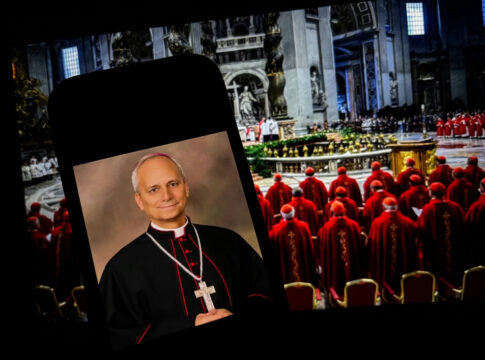
America’s first pope is snubbing his homeland while critics warn his immigration rhetoric could energize a left-leaning Catholic resistance movement that directly challenges traditional American values and the Trump administration’s border security priorities.
Pope Leo Declines Historic American Homecoming
Vatican Press Office spokesman Matteo Bruni confirmed on February 8, 2026, that Pope Leo XIV will not travel to the United States this year, ending weeks of speculation about a potential visit during America’s 250th anniversary celebrations. The Chicago-born pontiff represents the first American to lead the Catholic Church, yet he has chosen to prioritize trips to Africa, Spain, and Peru instead of returning to his homeland. Vice President J.D. Vance extended a formal invitation on behalf of President Trump, but the Vatican cited concerns about proximity to U.S. midterm elections and the transition of the aging papal nuncio as complicating factors.
The Vatican has confirmed that Pope Leo will not visit the United States this year, ending speculation about a possible trip later in the year. pic.twitter.com/qoxhWLLknS
— EWTN News Nightly (@EWTNNewsNightly) February 9, 2026
Immigration Criticism Signals Troubling Intervention
Pope Leo’s public statements criticizing U.S. immigration enforcement as contradicting pro-life principles demonstrate an alarming willingness to interfere in American sovereignty and border security. These comments directly challenge the Trump administration’s constitutional duty to protect American citizens and enforce immigration laws that Congress passed through legitimate democratic processes. The pontiff’s rhetoric appears designed to provide moral cover for those who prioritize illegal immigrants over American families struggling with the economic and safety consequences of open borders. This represents a fundamental misunderstanding of how a nation must balance compassion with the rule of law and citizen welfare.
Strategic Avoidance Raises Questions About Loyalties
Pope Leo deliberately minimizes his American heritage, choosing to deliver his first post-election remarks in Italian and Spanish rather than English, signaling a conscious effort to establish global rather than national identity. Historical precedents show Pope John Paul II visited Poland eight months after election and Pope Benedict XVI traveled to Germany soon after assuming the papacy, making Leo’s avoidance particularly conspicuous. The decision to prioritize regions like Algeria, Angola, and the Canary Islands—known migration hotspots—over the United States during its semiquincentennial celebration suggests the pontiff values globalist messaging over honoring his American roots and the Catholics who worship in the country that gave him opportunities.
Vatican Appointments Reflect Leftward Church Trajectory
The Vatican announced on February 7 that Pope Leo accepted the resignation of Denver Archbishop Samuel J. Aquila and appointed Bishop James R. Golka as his successor, continuing a pattern of leadership changes under the new pontificate. While Golka’s background as a diocesan priest with Jesuit influences emphasizes evangelization efforts, these appointments occur as the broader Church hierarchy appears increasingly aligned with progressive social justice priorities rather than traditional Catholic teachings on life, family, and individual liberty. The timing alongside Leo’s U.S. immigration critiques and travel priorities suggests coordination in reshaping American Catholic leadership to support agendas that conflict with constitutional conservatism and national sovereignty principles valued by faithful American Catholics.
Political Tensions Underscore Dangerous Vatican Overreach
The strained relationship between Pope Leo and the Trump administration highlights concerning trends where religious institutions attempt to dictate domestic policy in sovereign nations. The Vatican’s emphasis on migration issues while avoiding direct engagement with American Catholics reveals a preference for international political theater over pastoral care for believers in the pontiff’s home country. Cardinal Christophe Pierre, the U.S. papal nuncio now past resignation age at 80, represents another complication in Vatican-U.S. relations during this critical period. American Catholics deserve leadership that respects constitutional governance, supports secure borders, and prioritizes citizen welfare over globalist virtue signaling that undermines national security and fiscal responsibility.
Sources:
No U.S. Trip for Pope Leo in 2026, Vatican Says – National Catholic Reporter
Vatican Confirms Pope Will Not Visit U.S. in 2026 – Catholic Review
The funny part is that the only reason he was elected was his being American. They hadn’t had an American Pope, so the deal was made to elect him!
Pope Leo has replaced Jesus in the New Post Vatican II LGBTQ Sodomy Church, now dominated by gay appointees. Traditional Jesus-following Catholics now wander in the wilderness with Jesus, with no place to worship or to safely educate their children. The Mass has been desecrated, and the Confessional is haunting.
Who cares if he ever comes to USA
He is simply upset at the way the immigrants are been treated, being the POPE he represents all that our government does not.