

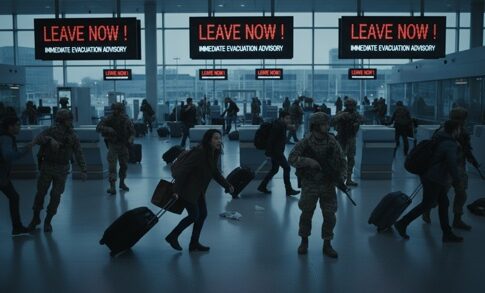
Washington’s DHS funding fight is now bleeding into America’s airports—where unpaid TSA staff and multi-hour lines are raising the real possibility of temporary closures.
Airport Disruptions Escalate as TSA Staffing Strains Grow
Airport operations are facing sharper disruption as the Department of Homeland Security funding lapse drags on and TSA staffing becomes more fragile. Reports describe security lines stretching into the multi-hour range at major hubs during peak spring travel, with airports warning passengers to arrive far earlier than normal. A TSA official’s warning that some airports could be forced to close underscores how quickly routine delay can turn into an operational crisis when screening lanes cannot be staffed.
Travelers are also seeing a breakdown in the normal flow of timely federal updates. TSA’s website and app paused updates after furlough-related impacts, leaving the public with fewer centralized tools to check wait times and screening status. That forces a patchwork approach where airports, airlines, and local advisories fill the information gap. The practical effect is confusion: families and older travelers are being told to plan for worst-case lines, missed connections, and last-minute gate changes.
How the Funding Lapse Is Hitting Workers and Throughput
The core operational issue is straightforward: TSA checkpoints need trained people on site, every day, in sufficient numbers to keep lanes open. During the lapse, TSA employees have faced missed or reduced pay, and reports indicate increased call-outs alongside hundreds of departures. When absenteeism rises, airports close individual checkpoints or reduce active lanes, and the entire system backs up. Even one closure at a major airport can ripple into long waits, missed flights, and overwhelmed customer service lines.
Airlines have responded publicly because they take the immediate hit when screening bottlenecks cause passengers to miss flights and schedules to unravel. Industry groups have urged Congress to restore pay and stabilize the workforce, arguing that the traveling public should not be used as leverage in a political standoff. Airports and carriers have echoed similar guidance: arrive very early, monitor airport alerts, and expect delays that can reach several hours at the busiest times, especially during spring break surges.
🚨 JUST IN: TSA Acting Deputy Admin Adam Stahl warns the DHS shutdown is pushing airports to the brink
"We're fully stretched… if this continues, it's not hyperbole to suggest that we may have to quite literally SHUT DOWN AIRPORTS."pic.twitter.com/BcBOrcZvgS
— Derrick Evans (@DerrickEvans4WV) March 17, 2026
Politics of the Standoff: Immigration Demands vs. Basic Continuity
The funding dispute is also a policy fight, with lawmakers split over border and immigration provisions tied to DHS funding. Reports describe Republican officials and the Trump administration blaming Democrats for using immigration-related demands as negotiating leverage, while Democratic figures have pushed changes tied to enforcement and agency operations. Regardless of which side wins the messaging war, the measurable outcome for Americans is a degrading baseline service: the federal government is struggling to keep security screening fully staffed and predictable.
What to Watch Next: Indicators of a Broader Breakdown
The clearest warning signs are staffing metrics and lane availability. When call-outs rise, when quit numbers climb, and when airports start closing checkpoints more often, wait times can spike from inconvenient to unmanageable. Reports have already described multi-hour lines and advisories reaching up to four hours early arrivals. If those conditions persist, the pressure will build on lawmakers to pass clean funding—because prolonged instability risks turning airport screening into a recurring bottleneck that punishes families, business travelers, and the broader economy.
For now, travelers should treat the situation as fluid and plan defensively. Airport-specific alerts and airline communications are filling gaps left by paused federal updates, but that decentralized approach makes last-minute surprises more likely. The larger lesson is one conservatives have been making for years: when Washington turns basic governance into a bargaining chip, ordinary Americans pay the price first—standing in lines, missing flights, and watching essential services wobble while politicians argue over unrelated priorities.
Democrats are acting like internal enemies of America. Remember their actions when you vote in upcoming elections. We need patriots running our country, not anti-Americans.
if the Democrats don’t want to work and do what they were elected to do and are getting paid for then they should be removed from office immediately. no sense paying them for nothing when hard working people- people who are necessary for security of this country deserve to be paid!!