

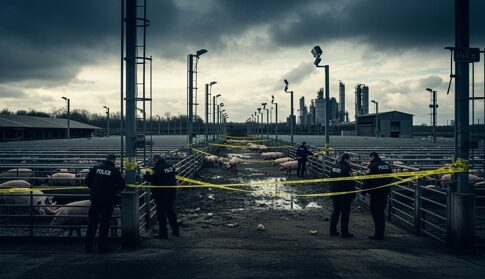
A seventeen-year-old worker’s mysterious death at Nebraska Governor Jim Pillen’s family hog farm has exposed troubling questions about youth labor in industrial agriculture and the dangerous intersection of politics and workplace safety.
A Governor’s Farm, A Teen’s Final Day
Owen Panther arrived for work at the Pillen Family Farms hog unit near St. Edward, Nebraska on April 1, 2024, just like any other day. The high school student had been working at the massive confinement operation, where thousands of pigs generate clouds of dust, dander, and respiratory irritants that seasoned workers learn to navigate carefully. By day’s end, emergency responders would find the seventeen-year-old unresponsive in the barn, marking the beginning of investigations that would stretch from Boone County to federal agencies in Washington.
The farm where Panther died operates under the umbrella of one of Nebraska’s largest pork producers, owned by the family of Governor Jim Pillen. This connection transformed what might have been a tragic local workplace accident into a case study of political conflicts of interest and agricultural labor practices. The governor, a veterinarian who built his fortune in industrial hog farming before entering politics, suddenly faced scrutiny over safety standards at operations bearing his family name.
The Invisible Killer in Industrial Agriculture
Investigators eventually determined that Panther likely died from an acute allergic reaction, a finding that illuminates hidden dangers in modern livestock operations. Industrial hog barns concentrate thousands of animals in enclosed spaces, creating atmospheric cocktails of animal proteins, feed dust, mites, and chemical irritants that can trigger severe respiratory responses. Unlike mechanical accidents or toxic gas exposures that grab headlines in farm safety discussions, allergic reactions represent a largely invisible threat that standard safety protocols struggle to address.
The finding of no foul play provided some relief to investigators navigating the politically sensitive case, but raised new questions about medical screening and emergency preparedness for young workers. Agricultural exemptions in federal labor law allow sixteen and seventeen-year-olds to perform many tasks prohibited in other industries, often without the comprehensive health evaluations that might identify workers at risk for severe allergic responses to farm environments.
When the Governor’s Business Becomes Public Safety
The death triggered parallel investigations by local law enforcement and the Occupational Safety and Health Administration, creating an unusual dynamic where federal regulators scrutinized a workplace owned by a sitting governor’s family. Boone County Sheriff’s deputies and the county attorney ordered an autopsy while maintaining public assurances about the thoroughness of their investigation. Meanwhile, OSHA agents descended on the rural facility to examine whether federal workplace safety standards had been violated.
Governor Pillen’s dual role as both the state’s chief executive and beneficiary of a family agribusiness created inevitable questions about regulatory oversight and potential conflicts of interest. While no evidence suggests interference with the investigations, the optics highlight broader challenges when elected officials maintain significant business interests in heavily regulated industries. The case arrived amid national scrutiny of child labor practices in meatpacking and agriculture, amplifying attention on youth employment policies that many rural communities consider essential economic lifelines.
Rural Labor Economics and Young Lives at Risk
Panther’s death exposed uncomfortable realities about rural labor markets where teenagers often fill essential roles in industrial agriculture operations. Small Nebraska communities frequently depend on large farms for employment opportunities, creating economic pressures that can override safety concerns when families need income and young people seek work experience. The agricultural exemptions that allow minors to work in potentially hazardous environments reflect historical assumptions about family farming that may not translate appropriately to modern industrial operations.
The investigation’s focus on allergic reaction rather than traditional workplace hazards suggests current safety frameworks may inadequately address emerging risks in concentrated animal feeding operations. As farms grow larger and more industrialized, the atmospheric conditions inside livestock barns increasingly resemble manufacturing environments that would trigger stricter worker protections and health screenings in other sectors. Yet agricultural exemptions continue treating these workplaces as extensions of traditional family farms rather than the industrial facilities they have become.
Sources:
Investigation finds teen who died on Pillen farm likely had allergic reaction
Death of teen worker at Pillen Family Farms sparks investigation