
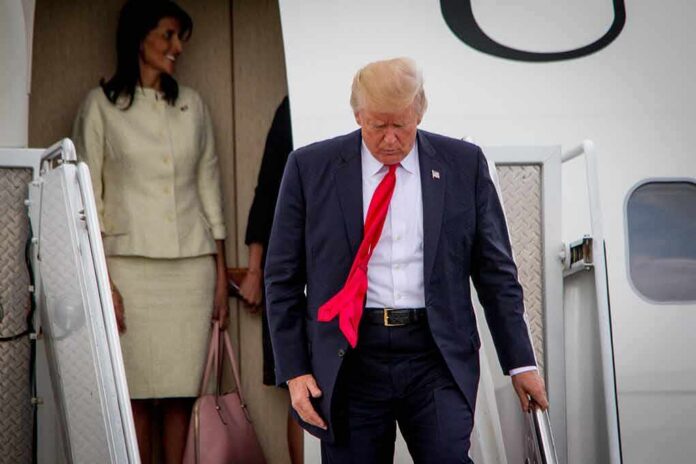
President Trump cut short his Camp David stay as Prime Minister Benjamin Netanyahu pared his U.S. visit to a brief New York stop, sharpening focus on fast-moving Middle East tensions.
Story Highlights
- Trump returned early from Camp David after the White House updated his schedule.
- Netanyahu canceled a planned Texas stop and limited his U.S. visit to New York.
- No Trump–Netanyahu meeting was scheduled due to timing constraints, officials said.
- Reports tied the shifts to regional tension, while reasons for Trump’s change were not stated.
What Changed In The Leaders’ Schedules
White House pool reports said President Trump cut short his weekend at Camp David and was expected back at the White House the same day. The White House updated his schedule and signaled a return by Marine One, marking an official change, not rumor. Anadolu Agency also reported the shortened stay, adding that no reason for the shift was given amid rising Middle East tensions. The move placed Trump back in Washington as events in the region demanded closer attention.
Israeli media said Prime Minister Benjamin Netanyahu canceled a planned Texas stop and would instead fly only to New York, deliver his United Nations address, and depart soon after. Ynet detailed the trimmed plan and the directive to the Texas advance team, while i24NEWS and Calcalist matched the same core change. The reports also noted that a planned meeting with Elon Musk would not occur under the new plan. The pivot compressed Netanyahu’s U.S. time to hours, not days.
No Bilateral Meeting On The Books
A senior United States official told The Jerusalem Post that Netanyahu would arrive after President Trump had already left, making a face-to-face meeting unlikely. Coverage around the United Nations General Assembly echoed that there was no Trump–Netanyahu meeting on the agenda. The official described Netanyahu’s New York presence as “quite limited,” reinforcing that the window for a sit-down did not exist this trip. The schedules therefore moved in parallel but not in lockstep.
These timing details matter for readers tracking U.S.–Israel coordination. When leaders move meetings off the table, staff-level channels take on more weight. That can slow decisions that need a leader’s sign-off. Still, modern teams can bridge gaps with secure calls and rapid briefs. What changed here is the speed of travel and the narrow New York window, which left little room for side events or long bilats, even as security issues demanded focus.
Why The Timing Points To Rising Regional Pressure
Anadolu Agency directly linked the schedule change to rising Middle East tensions but said the White House did not give a reason for Trump’s early return. That framing matches typical practice when events abroad accelerate. Leaders often shift travel to manage crisis talks, intelligence updates, or allied coordination from headquarters. While the reports do not claim a single trigger, the overlap in timing sent a clear message: keep options open, keep staff close, and keep command-and-control tight.
Reports are coming in of a major escalation in the Middle East.
Iran has reportedly placed its armed forces on their highest alert level. trump and netanyahu both cut trips short, while us embassies across the region issued security alerts.
If confirmed, this is extremely…
— 🇨🇦Wayne🇨🇦 (@Reil76) September 20, 2026
For Americans who value strong borders, stable energy prices, and peace through strength, the takeaway is simple. Swift changes show the administration is treating the moment as serious. Rapid returns and compressed itineraries help preserve flexibility, cut ceremony, and center mission first. That is sound leadership when adversaries test resolve. One caution remains: media can inflate coincidences into grand plots. Here, the facts are firm on the travel shifts, and thin on motives, so we stick to what is known.
Sources:
thegatewaypundit.com, news.com.au, ynetnews.com, osint613.com, azernews.az, aa.com.tr, ua.news