
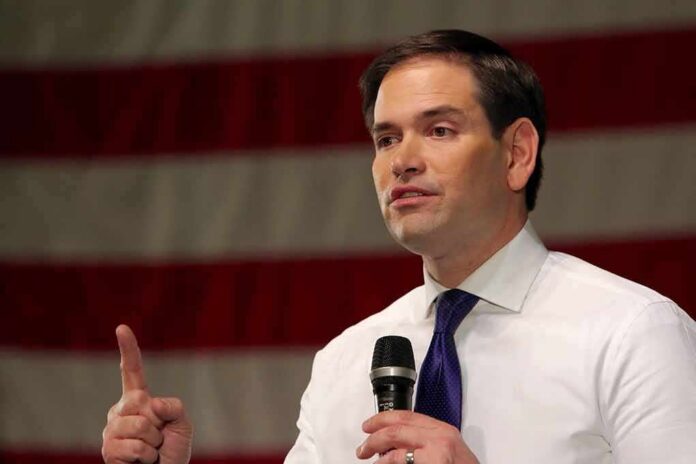
President Trump formally signed a commission making Secretary of State Marco Rubio the permanent national security adviser, uniting two powerful posts under one trusted lieutenant.
Story Highlights
- Trump signed a commission naming Rubio permanent national security adviser, officials said.
- Rubio keeps serving as secretary of state, a rare dual role last seen under Henry Kissinger.
- The move formalizes Rubio’s job after months in the acting role since May 2025.
- The announcement came during Trump’s trip to the United Nations meetings in New York.
Trump Finalizes Rubio’s Dual-Hat Leadership
White House and administration officials said President Trump signed a commission making Marco Rubio the permanent national security adviser. Reports state Rubio will keep serving as secretary of state, combining two key jobs at a time of high global tension. This step followed more than a year of Rubio serving in the role in an acting capacity. Outlets noted the move became public while Trump was in New York for United Nations meetings on September 22, 2026.
Rubio’s dual responsibility places him in rare company. Reporters across several outlets compared the setup to Henry Kissinger, who held both roles in the 1970s. That comparison underscores how unusual this structure is, even though the national security adviser is a staff role that does not need Senate confirmation. The White House did not announce a separate replacement adviser, signaling Rubio will continue to wear both hats as the administration presses its foreign policy goals.
From Acting Adviser To Permanent Appointment
News accounts traced Rubio’s path from acting national security adviser to the permanent post. Reports said he stepped in after Mike Waltz and has been serving since May 2025. The permanent commission removes any doubt about his status and cements daily control over the National Security Council. This change means the same leader shapes diplomacy at the State Department and policy planning from the White House, which can speed decisions and tighten message discipline.
Several outlets described the appointment as confirmed by White House and administration officials rather than a formal press release. They reported that Trump signed the commission, though not all stories agreed on the exact day. That variation reflects how staffing moves can become public during busy travel or summits. Still, the core facts match across major outlets: Trump signed, Rubio accepted, and both jobs remain under his direction going forward.
Why The Dual Role Matters For Policy
Placing one person over diplomacy and national security planning can streamline crisis response. Presidents sometimes choose this model to push a single, clear line on sanctions, military posture, and alliance talks. Supporters say it cuts turf wars and speeds action. They see the choice as a practical way to deliver results in a dangerous world. The Kissinger precedent shows the model can work when a president wants tight control and rapid follow-through at the highest levels.
• President: Donald J. Trump — @realDonaldTrump (personal) and @POTUS (official)
• Vice President: J.D. Vance — @JDVance (personal) and @VP (official)
• Secretary of State: Marco Rubio — @SecRubio (official)
• Secretary of the Treasury: Scott Bessent — @SecScottBessent…— Anthony Lewis Jerdine (@realAJerdine) September 23, 2026
Critics of this setup warn about too much power in one office and less internal debate. They argue it can sideline other agencies or reduce checks on fast decisions. That concern arose in the 1970s and appears again whenever the roles combine. Even so, today’s reporting focuses on what happened, not on a formal challenge to the appointment itself. The simple bottom line is that Trump chose a structure he believes will drive policy fast and keep the team aligned.
Rubio’s Next Steps And What To Watch
Rubio now owns the daily grind of both statecraft and security planning. He will guide talks with allies, shape responses to adversaries, and brief President Trump on options. He will also lead National Security Council meetings while directing America’s diplomatic corps. Watch for signs of quicker sanctions packages, faster coordination on military aid, and sharper messages abroad. Expect fewer mixed signals as the same leader steers both the policy design and the diplomatic push.
Sources:
pjmedia.com, usatoday.com, foxnews.com, washingtonexaminer.com, vinnews.com, apnews.com