

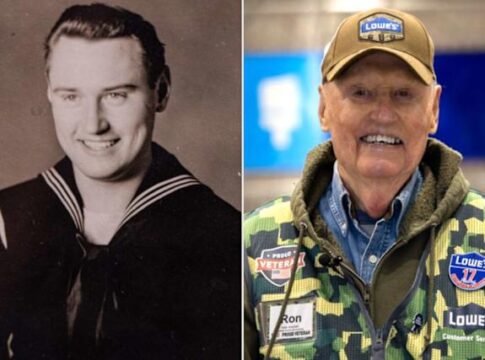
At age 98, a World War II veteran defies expectations and keeps working three days a week, challenging the modern narrative that seniors should quietly fade away—reminding Americans of the grit, purpose, and values that built this nation.
WWII Veteran’s Ongoing Work Defies Retirement Stereotypes
Ron Gibbons, a 98-year-old World War II veteran, remains a fixture in the American workforce, reporting for duty three days a week at an age when most are expected to retire quietly. Gibbons’ decision is not driven by economic necessity, but by a determination to stay engaged, active, and purposeful. His commitment challenges the modern narrative that aging Americans should be dependent or sidelined, instead spotlighting the enduring value of a strong work ethic and personal responsibility. Gibbons’ story stands in sharp contrast to a culture that too often discounts the wisdom and contributions of its elders.
While much of society has been encouraged to embrace early retirement or rely on government programs, Gibbons represents a generation shaped by duty, resilience, and patriotism. His experience in WWII forged lasting values—discipline, perseverance, and a deep sense of purpose—that continue to guide his choices decades later. These same values underpin the very fabric of American opportunity, now being revitalized under President Trump’s renewed focus on traditional principles and respect for those who have served. Gibbons’ ongoing service in his workplace offers a living rebuke to policies that promote dependency over individual agency.
Active Aging: A Model for American Renewal
Gibbons’ example illustrates the benefits of active aging, as research consistently links continued engagement to improved mental and physical health. Studies show that seniors who remain involved, whether through work or community service, experience greater fulfillment and longevity. This is especially true among veterans, whose sense of mission and camaraderie can be vital in later life. Gibbons’ story is echoed by others, such as 98-year-old Gene Wagner, who stays active through sports and community events. These cases challenge leftist narratives about aging, highlighting the dignity and productivity that comes from embracing responsibility rather than retirement as an end point.
Under previous administrations, policies frequently prioritized government intervention over empowering individuals, contributing to a culture of dependency and diminishing respect for traditional values. The Trump administration’s approach reverses this trend, emphasizing personal agency, honoring veterans, and restoring support for family and community. Initiatives that expand opportunities for seniors and veterans to remain engaged—rather than pushing for government handouts—align with the conservative vision of limited government and strong, self-reliant citizens. Gibbons’ choice to keep working is a testament to these ideals, demonstrating the real-world impact of policies that foster opportunity instead of dependency.
Veterans, Community, and the Power of Purpose
Gibbons’ decision to remain in the workforce is supported by a network of family, community, and responsive employers who value the reliability and wisdom he brings. The Department of Veterans Affairs has increased its focus on active aging and healthcare for veterans, recognizing that continued engagement promotes well-being and independence. Gibbons’ story is part of a broader movement, visible in initiatives and community programs that encourage elderly Americans to contribute their experience and values to society. As the number of WWII veterans declines, their example becomes even more precious—a living reminder of the principles that have historically made America strong.
Short-term, stories like Gibbons’ inspire others to rethink retirement and pursue active, purposeful lives. Long-term, they help shift societal attitudes away from ageism and dependency, and toward respect, inclusion, and opportunity for seniors. The renewed focus on veteran support and age-friendly policies under President Trump’s leadership reinforces these themes, countering years of misguided priorities that eroded work ethic and undermined family values. Gibbons’ life is proof that age does not define a person’s worth or capacity to contribute—American greatness is built on the character and perseverance found in patriots of every generation.
Sources:
WWII Veteran, 98, Explains Why He Still Works 3 Days a Week at Unexpected Job (Exclusive)
Life goals: 98-year-old World War II veteran continues to score in the hockey rink