

2026 is the year the sky stops being background scenery and turns into a schedule of “look up now” moments you can plan for like holidays.
Why 2026 Feels Like a “Greatest Hits” Year for Skywatchers
NASA and major skywatching calendars line up on the same point: 2026 stacks multiple public-friendly events close enough together that you can build a simple “sky season” routine. Predictable orbital mechanics, refined by modern ephemerides, turn these into dependable appointments rather than wishful stargazing. The practical twist is location. Some events reward anyone with a clear horizon, while others demand travel, timing, and a willingness to lose to weather.
Readers who remember the 2017 and 2024 eclipse frenzies already know what happens next: hotels fill, highways clog, and grown adults get emotional over a moving shadow. That isn’t hype; it’s human nature colliding with a rare visual proof that the universe runs on clockwork. The mistake is thinking you need expensive gear. For most 2026 highlights, the real “equipment” is a plan: where you’ll stand, when you’ll look, and what you’ll ignore.
January’s Power Move: Jupiter at Opposition and a Fast Meteor Punch
January opens with two very different kinds of spectacle. The Quadrantids meteor shower peaks around January 2–3, famous for a brief, intense burst that punishes procrastination. A few days later, Jupiter reaches opposition around January 10, placing Earth between Jupiter and the Sun, which boosts brightness and improves telescope views. This is the moment to show skeptical friends that planets aren’t just “bright dots.”
Opposition season also rewards conservative, common-sense observing: buy once, use often. A modest pair of binoculars or an entry-level telescope can reveal Jupiter’s moons shifting night to night, a reminder that real education doesn’t require trendy tech. Apps help, but they can also distract you into scrolling instead of seeing. Treat Jupiter like a weekly check-in, not a one-night novelty, and the sky starts to feel less random and more readable.
February’s Two-Part Drama: Annular Eclipse and the Six-Planet Parade
February brings the year’s sharpest contrast between “not for most of us” and “almost anyone can try.” An annular solar eclipse on February 17 tracks over Antarctica and the southern Indian Ocean, making it a travel-and-logistics event rather than a backyard one. Safety stays non-negotiable: solar viewing requires proper filters. No photo or bucket-list brag justifies gambling with permanent eye damage.
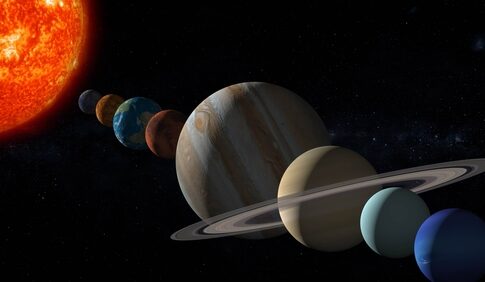
Then February 28 flips the script with a widely discussed planetary parade: six planets grouped in the sky—Mercury, Venus, Neptune, Saturn, Uranus, and Jupiter—with several visible to the unaided eye under good conditions. Neptune and Uranus usually need optics, and that’s fine; the visual punch still comes from the bright, easy targets. The real value is perspective: you’re watching multiple worlds share a slice of sky because their orbits momentarily cooperate.
March’s Total Lunar Eclipse: The One You Can Watch Without Special Gear
A total lunar eclipse on March 3 favors parts of the world including the U.S. West Coast and regions across Oceania and Asia. Lunar eclipses deliver maximum drama with minimum hassle: no filters, no squinting, no “is it starting yet?” anxiety. The Moon’s color shift during totality—often copper or brick—feels personal, as if the night changed its mind. Cloud cover remains the only real gatekeeper.
For adults who have grown allergic to manufactured wonder, lunar eclipses still hit because they’re honest. The Moon does not need narration. You can explain it in one sentence—Earth’s shadow—and spend the rest of the time watching. This is also the easiest event to share with neighbors or grandkids without turning it into a lecture. Set a reminder, step outside, and let the silence do the work.
June’s Venus–Jupiter Conjunction and the Return of “Two Bright Beacons”
June 8–9 features a Venus–Jupiter conjunction, the kind of event that makes casual observers suddenly ask, “What are those two bright stars?” They aren’t stars, and that’s the hook. Conjunctions don’t mean the planets are close in space; they mean our line of sight stacks them near each other. That distinction matters because it separates astronomy from astrology, measurement from mood.
Conjunctions also reward the simplest habit in skywatching: keep a consistent viewing direction. If you learn where the Sun sets from your yard, you can find the evening planets more often than not. That’s an underrated, old-fashioned skill—basic orientation—made relevant again. A clear western horizon becomes an asset. Trees, buildings, and light pollution become the enemy, and you start noticing your environment in a new way.
August’s One-Two Finish: Perseids and a Total Solar Eclipse with Real-World Stakes
August brings the year’s biggest double feature. The Perseids peak around August 12–13, the dependable meteor shower tied to debris from Comet Swift–Tuttle. Numbers depend on darkness and the Moon, so expectations should stay grounded: a rural sky can feel like fireworks, while suburbia can turn it into a slow trickle. The better you protect your night vision, the more the sky “opens up.”
August 12 also delivers the marquee event: a total solar eclipse tracking from the Arctic toward parts of Greenland, Iceland, and Spain. Totality changes people because it’s not just a dimming; it’s a sudden, impossible twilight and a visible solar corona. Eclipse travel can be worth it, but common sense rules: plan for traffic, plan for clouds, and plan a backup viewing location. The shadow waits for no one.
2026’s deeper lesson is conservative in the best way: the universe doesn’t care about your opinion, your politics, or your timeline, and that’s precisely why it’s worth watching. These events reward preparation, patience, and community more than gadgets or hype. Pick two dates you’ll actually keep, build your routine around them, and treat the night sky like a heritage asset. You don’t have to chase every event to feel the year.
Sources:
Most Notable 2026 Astronomical Events: A Year of Watching the Skies
Full Moon Calendar: Dates, Times, Types