

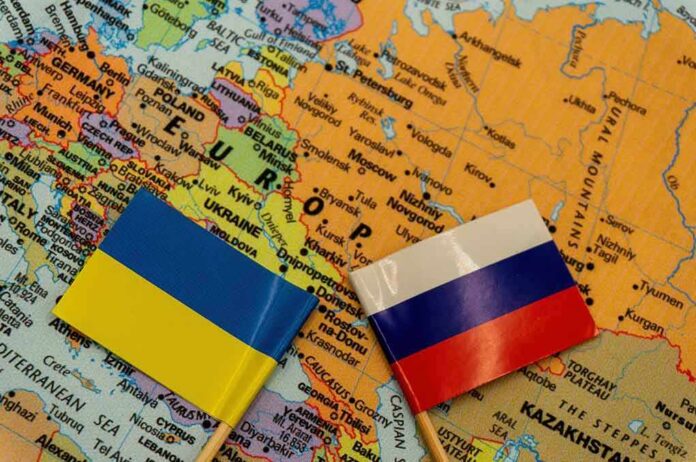
Moscow says any Ukraine peace must accept “realities on the ground,” raising the stakes if Western backing fades.
Story Highlights
- Russia signals it is open to talks but insists Kyiv accept battlefield realities and limits on NATO plans.
- Kremlin officials float resuming trilateral talks with the United States and Ukraine, without firm timelines.
- Ukrainian public shows war fatigue yet largely rejects concessions on Russia’s terms, complicating any shift toward Moscow.
- Postwar “pragmatic accommodation” may be discussed, but durable alignment with Russia remains unlikely without major pressure.
Russia’s Conditions Shape Any Postwar Path
Russian leaders state any settlement must reflect the current map and curb Ukraine’s Western ties. Reuters reported that a senior diplomat said new ideas are welcome only if they fit “realities on the ground,” while the Kremlin says its stance has not changed since 2024, when it demanded Ukrainian withdrawal from four regions and an end to North Atlantic Treaty Organization plans. Those terms set a high bar. They also show how Moscow defines “peace” as acceptance of limits on Ukraine’s sovereignty.
Kremlin spokesmen and ministers say they are ready to talk and even see room for a United States role. Russia has voiced hope that United States-mediated engagements with Kyiv could restart, citing a “confirmed political will” to discuss a framework, though without detailing concessions. Moscow also told international outlets it expects or does not rule out trilateral sessions with Washington and Kyiv, yet offered no dates or venues. That posture invites process, not compromise, and keeps military pressure in play.
Talks Without Pause Keep Pressure on Kyiv
Russian officials have said combat would not stop even during negotiations. Foreign Minister Sergey Lavrov stated Moscow would not pause strikes while talks proceed. That approach forces Ukraine to weigh losses against concessions in real time. It also tests Western staying power. If aid slows and costs rise, pressure could build for a ceasefire that locks in Russian gains. That outcome would reward aggression and embolden future coercion, which conservatives warn undermines deterrence and stability.
Signals from Moscow about frameworks also reference ideas linked to Washington. Kremlin comments described a possible “basis for talks” connected to a framework discussed in the United States, while still avoiding details or commitments. The pattern is clear. Russia courts a process that legitimizes its demands while shifting burden onto Kyiv and its backers. Any American-led structure must insist on sovereignty, secure borders, and real enforcement. Otherwise, it risks a paper peace that invites the next land grab.
Ukrainian Public Fatigue Meets Hard Red Lines
Polling shows Ukrainians are tired of war and more open to negotiations, but not on Russia’s terms. Gallup reported rising support for a negotiated end, reflecting strain from years of fighting. Research from policy centers notes the same trend while stressing that large majorities still reject concessions that validate occupation or neutrality forced by Moscow. That mix matters. War weariness can drive talk of accommodation, yet national resolve resists a deal seen as surrender.
Analysts caution that after big wars, nations sometimes accept limited ceasefires or cold peace, but deep political realignment is rare. Studies argue Russia will emerge aggrieved and more dangerous, not reconciled, even if the guns fall silent. That view suggests Kyiv may consider tactical de-escalation while staying oriented to the West. Durable tilt toward Moscow would likely require steep economic or security shocks and a deal Ukraine’s public has little appetite to accept today.
What This Means for U.S. Policy Under President Trump
American leadership can shape whether Ukraine faces coercion or can bargain from strength. United States-backed talks that maintain pressure on Moscow while aiding Ukraine’s defense reduce the chance of a dictated peace. Kremlin outreach for trilateral formats shows Washington’s leverage. If the West blinks, Russia’s “realities on the ground” become precedent. If the West holds firm, any settlement is more likely to protect borders, property rights, and the principle that force does not decide map lines.
For conservatives, the stakes are basic: stop endless checks without strategy, deter bullies, and defend national sovereignty. A clear framework should tie any relief from sanctions to verifiable pullbacks, not promises. It should reject limits on a free nation’s alliances. It should back families and energy security by avoiding wider war and by preventing new shocks to fuel and food markets. Strength with accountability is cheaper than another crisis sparked by appeasement.
Bottom Line: Accommodation Is Not Alignment
Ukraine may explore pragmatic steps to quiet the front if costs rise, but long-term alignment with Russia is a different leap. Moscow’s demands aim to fix gains and bind Kyiv’s future. Public sentiment in Ukraine points to fatigue, not surrender. United States policy that pairs diplomacy with leverage can help end fighting without blessing aggression. That balance protects sovereignty abroad and common sense at home—peace with security, not peace at any price.
Sources:
newsukraine.rbc.ua, reuters.com, kyivindependent.com, aa.com.tr, english.news.cn