
A new strike on Saudi Arabia’s East–West pipeline forced another shutdown, threatening global oil supplies and prices.
Story Highlights
- Saudi source says a pumping station near Khurais was hit and oil flow was halted.
- The line had already faced multiple attacks in September and was shut as a precaution.
- Saudi officials previously reported throughput losses of about 700,000 barrels per day from attacks.
- Disruptions on this route strain a key bypass to the Strait of Hormuz and shake markets.
Saudi Pipeline Hit Again, Pumping Halted Near Khurais
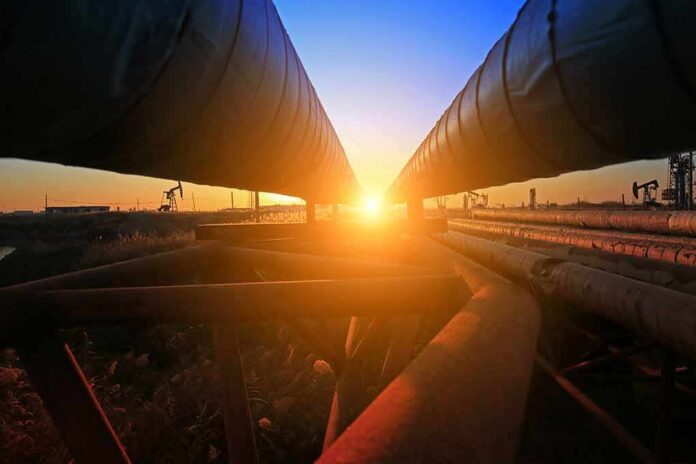
A Saudi energy sector source told Agence France-Presse that the East–West pipeline was struck again and that a pumping station near Khurais, east of Riyadh, suffered heavy damage, forcing a halt to oil flows. The report said the site had not been targeted before and that pumping stopped after the hit. The strike adds to a string of attacks on the same system in recent weeks, and it directly affects a route that moves crude from eastern fields to Red Sea ports.
Saudi outlets and international wires carried similar notices that pumping was halted following the new attack, citing the same source language on location and disruption. The East–West line, also known as the Petroline, spans the kingdom and lets Saudi Arabia ship oil without using the Strait of Hormuz. When an attack shuts or slows this line, it narrows the country’s options and can lift prices fast as traders price in lower available barrels.
Track Record Of Recent Attacks And Confirmed Throughput Losses
Saudi authorities have publicly detailed earlier damage and losses. An official Ministry of Energy statement said attacks in prior incidents hit one of the East–West pumping stations and reduced the line’s throughput by about 700,000 barrels per day. State media also recorded that on September 10 the government shut the pipeline as a precaution after multiple hits in the Riyadh and Madinah regions. Those facts show the pipeline’s repeated exposure and the scale of strain when critical nodes go down.
Global outlets have explained why this system matters. The pipeline is a main contingency route when Gulf sea lanes face risk, and it supports exports to the Red Sea when the Strait of Hormuz is tense or blocked. Analysts warned that closing or constraining this route can pull millions of barrels per day off the market, at least for a time, and can spark price jumps that hit fuel and heating costs worldwide. These new strikes land on top of that fragile setup.
Why This Matters For American Families And Energy Security
Middle East strikes on oil lines do not stay “over there.” They show up at our pumps and in our power bills within days. Every time the East–West pipeline slows or stops, markets expect fewer barrels, and prices rise. That pressure lands on working families, truckers, farmers, and small businesses. Conservatives know energy security is national security. The United States needs steady supply, strong domestic production, and fewer global choke points that bad actors can hit to tax our wallets by force.
President Trump’s team has pushed to expand American output, speed permits, rebuild refining capacity, and protect supply chains. That approach helps absorb shocks like this and reduces leverage from unstable regions. But global crude still sets the base price. When a key Saudi pipeline stops again after a new attack, the world feels it. That is why hardening infrastructure, deterring regional militias, and keeping our Strategic Petroleum Reserve ready all matter right now.
Known Facts Today And What We Are Watching Next
Here is what is established: a Saudi source told Agence France-Presse the East–West pipeline halted pumping after an attack hit a Khurais-area station; prior Saudi statements confirm earlier hits, a precautionary shutdown, and material throughput loss in recent months. We are watching for official restoration timelines, repair status at the Khurais site, and any confirmed changes in seaborne shipments from Red Sea terminals. We are also tracking moves in benchmark prices following the shutdown report.
Policy Stakes: Secure Supply, Strong Deterrence, American Production
Energy stays affordable when supply is secure and steady. That means three things. First, shore up defenses around global routes that Americans still rely on, including the East–West line. Second, punish and deter cross-border drone and missile attacks that target civilian energy systems. Third, keep building at home so the United States sets the pace, not unstable regimes. Those steps reflect common-sense conservative values: protect families, defend commerce, and avoid surrendering our prosperity to foreign disruptions.
BREAKING: Oil flows in Saudi Arabia’s East-West pipeline were halted again following a Houthi attack on a pumping station east of Riyadh, according to AFP.
“There was big damage and the pipeline stopped again,” a source told AFP.
— Faytuks Network (@FaytuksNetwork) October 5, 2026
Sources:
insiderpaper.com, today.lorientlejour.com, turkiyetoday.com, nampa.org, english.ahram.org.eg