
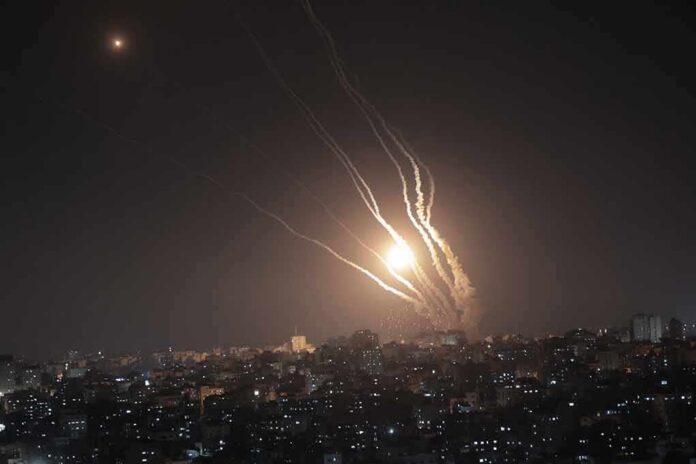
Iran-backed Houthi rebels fired a ballistic missile straight at Saudi Arabia’s capital, and the kingdom says its air defenses blew it out of the sky before it could do any damage.
Quick Take
- Houthi spokesman Yahya Saree claimed “two successful military operations,” saying fighters hit “sensitive sites” in Riyadh.
- Saudi-led coalition spokesman Turki al-Maliki says forces intercepted and destroyed the missile before it reached the capital.
- Emergency alerts sounded across Riyadh, and smoke and flames were spotted near King Khalid International Airport.
- No casualties or damage were reported, despite the dramatic scene near the airport.
- The strike attempt shows Iran’s proxy network still threatens a key U.S. partner in the Middle East.
Houthis Claim Hit on Saudi Capital
Yemen’s Houthi movement announced late on September 19, 2026, that it launched a major strike on Saudi Arabia. Spokesman Yahya Saree said fighters carried out “two successful military operations,” with the first hitting “sensitive sites” in Riyadh. The group said it used a mix of ballistic missiles, cruise missiles, and drones. Multiple outlets picked up the claim within hours, though the Houthis never named a specific building or facility that was struck.
Saudi civil defense sent out warnings of a “hostile aerial threat” over Riyadh, and residents reported air-raid alerts before dawn. Reuters reported flames and a large plume of smoke near the city’s main airport shortly after the alert went out. That timing lines up with the Houthi claim, which is why Saudi officials did not dismiss the incident as pure propaganda. They confirmed something real happened in the skies over their capital.
Saudi Military Says Missile Never Got Through
Saudi Arabia’s own account tells a very different story about what that missile actually did. Coalition spokesman Turki al-Maliki said air defenses “successfully intercepted and destroyed” the ballistic missile before it reached Riyadh. The kingdom’s statement came hours after the attack, a delay that let the Houthi narrative spread first. Still, the Saudi position has been consistent across nearly a dozen separate reports on the incident.
The Associated Press reported flatly that there were “no reports of casualties or damage” from the attempted strike. That detail matters. A missile that gets shot down in midair produces smoke, debris, and chaos on the ground, even when it never hits its target. Saudi officials framed the whole episode as a foiled attack on civilians and civilian infrastructure, not a successful Houthi operation. No independent forensic teams have confirmed a missile crater, debris field, or verified strike photo tying the smoke to a Houthi warhead.
Iran’s Fingerprints and What It Means for America
This was not an isolated event. Houthi forces have hammered Saudi Arabia with missiles and drones for years, and the group has grown far more capable since 2015. Research from the Armed Conflict Location and Event Data Project found Houthi use of guided rockets and missiles jumped from 15 percent of yearly attacks in 2015 to 89 percent by 2022, a sign Iran has kept feeding its proxy force better weapons. The Riyadh strike attempt fits that same pattern of escalation.
Saudi Arabia is a major U.S. security partner, and Iran’s fingerprints are all over the weapons the Houthis keep firing at it. Every one of these attempted strikes tests whether Riyadh’s air defenses, many built with American technology, can keep holding the line. President Trump has reportedly weighed and so far held off on direct U.S. military action against the Houthis, betting that Saudi defenses and diplomatic pressure can contain Iran’s proxy war without dragging America into another Middle East conflict.
Sources:
middleeasteye.net, aljazeera.com, timesofindia.indiatimes.com, washingtonpost.com, jpost.com, shafaq.com