

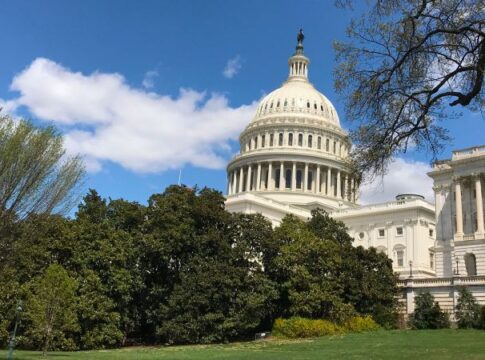
The nation’s capital stands as the world’s most powerful city, built from deliberate design rather than chance. George Washington’s vision transformed undeveloped land along the Potomac River into a symbol of American governance that endures over two centuries later.
The Foundation of Federal Power
In 1790, the Residence Act established a 100-square-mile federal district carved from Virginia and Maryland. The decision ended fierce debate about whether the capital should remain in Philadelphia or move to a purpose-built city independent of state control. George Washington appointed commissioners and planners to develop this unprecedented project, selecting Pierre Charles L’Enfant as chief architect. L’Enfant, who Americanized his name to Peter after the French Revolution, received orders to create something extraordinary for the new republic.
Richard Longstreth, an architectural history professor at George Washington University, explains that Washington envisioned the capital as America’s equivalent to Paris. The first president wanted more than a government seat. He sought a center of culture, finance, and trade on an epic scale. L’Enfant designed wide boulevards crossing diagonal avenues, connecting key government buildings in a layout that could accommodate a population rivaling London. Though L’Enfant was eventually replaced and Andrew Ellicott refined the plans officially circulated in 1792, the French architect’s vision remains visible throughout modern Washington.
Design With Purpose
The government relocated to Washington in 1800, with Congress taking jurisdiction over the District of Columbia in 1801. L’Enfant’s original city outline remains displayed at Freedom Plaza, showing the intentional grandeur behind every avenue. The architect stated clearly he wanted a plan worthy of a grand empire that would inspire envy from friend and foe alike. Walking the National Mall among the memorials today confirms his success. The architecture conveys power and national importance through deliberate design choices that have shaped American governance for generations.
Separating Myth From Reality
Professor Longstreth dismisses the persistent claim that Washington was built on swampland, attributing this myth to L’Enfant’s original canal becoming part of the sewage system. The low-rise architecture that defines the cityscape results from deliberate planning decisions rather than environmental constraints. Despite ongoing political references to draining the swamp, the capital’s founding represented careful constitutional planning to create a federal district separate from state influence, establishing the framework for American government that continues today.