
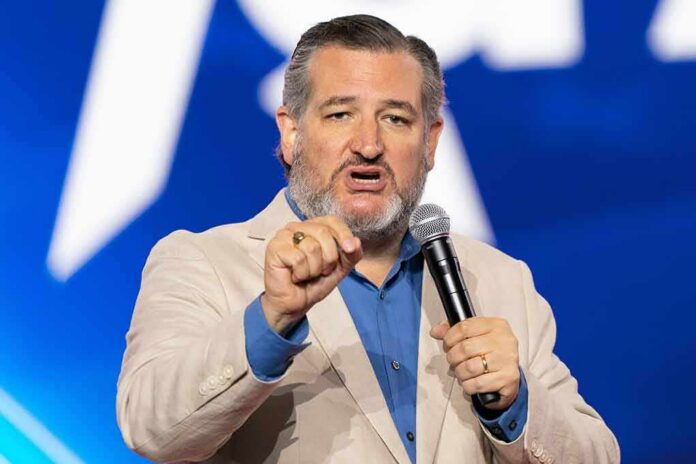
Ted Cruz said he still wants to be president, signaling a possible 2028 showdown with Vice President JD Vance.
Story Highlights
- Cruz said “it’s no secret that I want to be president,” keeping 2028 on the table.
- He said Republicans have not settled on JD Vance as the 2028 heir to President Trump.
- Reports say Cruz is carving his own lane on policy and endorsements before 2028.
- Media attention grew after podcast comments and recent interviews about the party’s future.
Cruz Signals 2028 Ambition In Plain Terms
Senator Ted Cruz of Texas said, “it’s no secret that I want to be president,” during an appearance on Lieutenant Governor Dan Patrick’s podcast on August 26, 2026. He did not rule out a 2028 campaign and added that “time will tell” when pressed on his plans. His remarks were direct and left the door open. They also came as interest in the next Republican field grows near the end of President Trump’s second term.
Cruz’s statement adds a clear marker in early jockeying for 2028. He said he cares deeply about the direction of the party and expects to be part of the conversation. He framed the choice ahead as a debate over what Republicans believe and how to win. That message matches his long-running push to rally conservatives on spending, borders, and courts, and it shows he aims to shape the agenda, whether as a candidate or a key voice.
Positioning Against An Assumed Heir
Cruz argued that Republicans have not coalesced around Vice President JD Vance as the automatic successor. He said the party must decide “who we are” and “what do we believe” after President Trump leaves office. That view pushes back on the idea that the 2028 nod is set. It also invites a policy fight on issues like foreign policy, trade, and federal scope that matter to grassroots conservatives.
Coverage over the summer detailed steps by Cruz to chart his own path within the party. Reporting noted instances where Cruz backed candidates who were not aligned with Trump endorsements, suggesting he is testing independence as 2028 approaches. That choice signals a bid to lead on ideas and to court voters who want strong borders, lower costs, and limited government without party gatekeepers deciding the race early.
What A Cruz-Vance Contest Would Mean For Conservatives
A Cruz-Vance clash would center on priorities important to the base: border security, energy dominance, taming inflation, free speech, and the fight against federal overreach. Cruz’s record shows a focus on constitutional rights, courts, and spending restraint. Vance, as vice president, brings White House experience and ties to Trump’s agenda. Voters would likely weigh who can protect gun rights, secure the border, and keep Washington from pushing woke mandates and runaway debt.
Dear Ted Cruz,
Traditional Republicans get nothing done. I’m not supporting any non-MAGA Republican for President in 2028. Today’s traditional Republicans cut side deals with communists. No Thanks!
Love,
Common Cent$ https://t.co/iUJuQx4QiQ— Common Cent$ (@Common_Cent1) August 27, 2026
Conservatives who want a real debate may welcome this. A robust primary can test who will hold the line on the Constitution, stop illegal immigration, back police, and get energy costs down by unleashing American production. Cruz’s comments set the stage for that debate. If he runs, he will argue experience and conviction. If Vance runs, he will argue continuity and results. Either way, the party will choose the best fighter to defend families and freedom.
Media Signals And The Long Runway To 2028
Modern politics rewards careful hints more than early filings. A clear statement like “I want to be president” grabs attention and invites donor talks without a formal launch. News cycles then amplify each step, from podcast lines to endorsements. Cruz’s remarks fit that pattern, and they guarantee months of focus on his next moves and how they compare with the vice president’s posture heading into the post-Trump era.
For readers, the bottom line is simple. Cruz put his ambition back in public view. He says the party should not anoint anyone yet and should first settle core principles. That approach keeps the door open for a platform built on border security, energy freedom, law and order, and spending discipline. Those are the issues that beat back chaos, protect families, and keep Washington in check. The next steps will tell how far Cruz takes it in 2028.
Sources:
nypost.com, texastribune.org, axios.com