
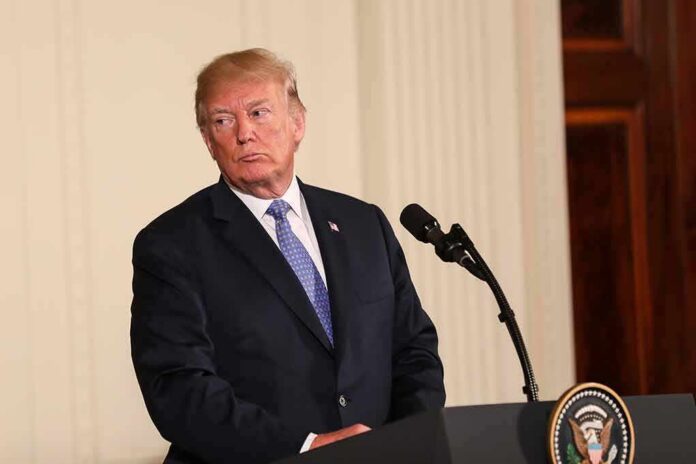
At a Michigan rally, President Trump urged voters to block Abdul El-Sayed’s Senate bid and “send him back to where he came from,” tying the warning to terrorism and Capitol security concerns.
Story Highlights
- Trump linked El-Sayed to jihadism and the Muslim Brotherhood while stumping for Mike Rogers.
- Media reported the “send him back” line as part of Trump’s election pitch in Michigan.
- Fact-checkers said there is no evidence El-Sayed belongs to the Muslim Brotherhood.
- Coverage emphasized backlash over 9/11 references and anti-Muslim framing.
What Trump Said At The Michigan Rally
President Trump told Michigan voters he came to stop Abdul El-Sayed from entering the United States Senate. Trump called El-Sayed a “jihadist” and a member of the Muslim Brotherhood, and asked voters to “send him back to where he came from.” He framed the appeal as a matter of national security and keeping the Capitol safe. The remarks came while he urged support for Republican Mike Rogers, making the argument part of the Senate race message.
Trump pressed the point by linking El-Sayed to terrorism and warning about Senate security if he won. Reporters on scene and later coverage quoted Trump’s language and noted the crowd response. The comment fit into a larger pattern of sharp contrasts that focused on religion and alleged extremist ties. The pitch was direct: defeat El-Sayed, elect Rogers, and avoid risk to the country. The words were recorded and widely repeated across outlets that covered the rally.
Evidence Gaps And The “Send Him Back” Line
Independent checks said Trump did not present records proving a Brotherhood link. PolitiFact rated the Brotherhood claim “Pants on Fire,” and reporting did not surface documents tying El-Sayed to the group. Outlets also pointed out confusion in the “send him back” phrasing because coverage identified El-Sayed as U.S.-born or Michigan-rooted, which made the line sound like a removal despite his ties to the state.
For readers, two points can be true at once. First, the threat of jihadism is real and must never reach the Senate. Second, claims about any candidate’s ties must rest on solid proof. When a charge lacks documents, intelligence records, or sworn testimony, voters are left with rhetoric, not evidence. Conservative voters should demand receipts every time. That standard protects the cause and keeps attention on policies that secure the border, lower costs, and defend the Constitution.
How Media And Opponents Framed The Clash
National outlets framed Trump’s language as anti-Muslim and highlighted his 9/11 references, which fueled backlash and overshadowed policy contrasts. Reports from public radio, network news, and international media focused on faith-based framing and terrorism imagery, rather than budget, border, or energy debates that matter to families at the pump and the grocery store. The coverage made the rhetoric itself the story, shaping how undecided voters heard the exchange.
Former US President Donald Trump made a racially charged remark about Abdul El‑Sayed. Trump: "If you're black or if you're Jewish and you vote for Abdul, you're not smart. I'm being nice. You're not." pic.twitter.com/fqYFpgyZK7
— World Vibe (@world_vibe_en) October 31, 2026
El-Sayed rejected the jihadist label and cast the attacks as bigoted. His allied voices echoed that frame and said he was focused on lowering costs. While those statements are his position, the key takeaway for conservatives is tactical: when the press centers identity fights, it buries the agenda that wins elections—secure borders, safer streets, cheaper energy, and a government that lives within its means. Campaigns must land facts first or risk losing the argument.
What Matters For Michigan Voters Right Now
Michigan voters face a clear job. They must judge who will keep families safe, defend free speech, protect Second Amendment rights, and end Washington chaos. Strong claims about extremists belong in that test, but they must come with proof that stands up after Election Day. Voters should press every campaign to publish sources, documents, and names. Do that, and the focus returns to results: lower inflation, American energy strength, and a border that is finally under control.
Sources:
mediaite.com, npr.org, boston.com, politifact.com, nbcnews.com, bbc.co.uk