
France’s government moved to curb public gatherings after rioters torched city halls and attacked public buildings across multiple cities.
Story Snapshot
- Violence and fires hit several French cities as demonstrations drew hundreds of thousands.
- Police reported mass arrests and attacks on city halls, including heavy damage in Limoges.
- President Emmanuel Macron told local officials they can prohibit gatherings when needed.
- Authorities insist most protesters were peaceful but vow tough prosecutions for rioters.
Nationwide Unrest Targets Public Institutions
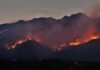
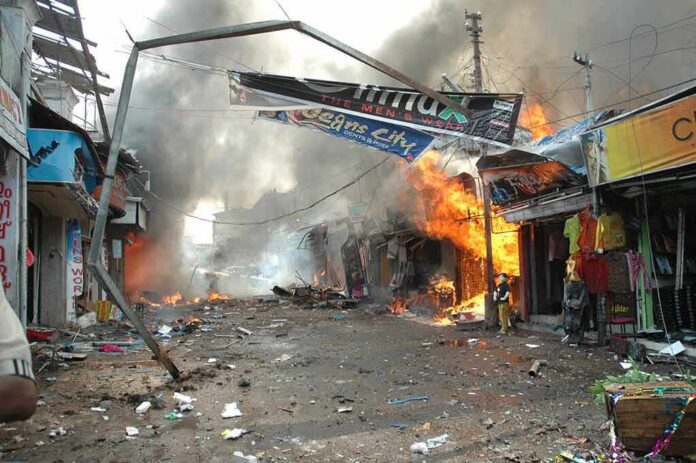
Reports from France described fires, smashed storefronts, and assaults on civic buildings in several cities on October 17 and 18. Police said masked groups hijacked demonstrations and targeted town halls and other government sites. Paris police reported hundreds of arrests in the capital region. In Limoges, a city hall blaze caused major structural damage, with parts of the roof collapsing. These scenes showed more than scattered clashes. They showed organized violence against symbols of the state.
News outlets estimated roughly 550,000 people took to the streets across France that weekend. Many marched over rising living costs, fuel prices, and school conditions. Most participants remained peaceful, according to officials and reporters on the ground. But the violent minority inflicted serious damage and drew a heavy police response. That split matters. It explains why the government framed the crisis as both a policing challenge and a social warning sign.
Macron Signals Targeted Bans To Restore Order
President Emmanuel Macron addressed the nation as the damage mounted. He said the state would enforce republican order and prosecute anyone who attacked town halls, prefectures, and businesses. He directed regional prefects to coordinate with mayors to protect buildings and shops. That order included a clear tool: prohibit particular gatherings when needed to keep the peace. Macron’s message tried to balance the right to protest with a mandate to stop violence before it spreads.
Paris authorities quickly applied this approach. The Paris police prefect issued formal orders that partially banned segments of protest routes under the internal security code. The documents allowed modified marches to proceed while blocking high-risk areas. This mix of limits and allowances shows how officials aim to separate lawful assembly from riot risk. The goal is to keep streets open to citizens while closing lanes that rioters might exploit for attacks.
Law-And-Order Push Meets Free-Assembly Concerns
Conservatives will see a core lesson here: when radicals attack city halls and terrorize neighborhoods, the state must act. Order is a guardrail for liberty, not its enemy. France’s leaders say most citizens protested peacefully. But they also admit normal crowd control was not enough in some areas, so they empowered targeted bans and stronger policing. That step acknowledges a hard truth: civic rights fail when violent groups make public space unsafe.
France Burns: Media Calls It Student Protests. The Videos Show Something Else
Thick black smoke fills a public square in France. Hooded figures move through the haze. Debris litters the ground. Structures burn. People film as the chaos spreads. That is the footage circulating… pic.twitter.com/jzTJrIEJQZ
— Bart (@Bart16271) October 18, 2026
Still, numbers remain messy. Different outlets cited arrest totals that varied by time and location as officials updated counts. What is not in dispute is the pattern of violence against public buildings and shops, and the government’s shift to more forceful tools. For Americans who prize the First Amendment and the right to assemble, the French response is a caution. Protect speech. Protect property. Target criminals fast. Do not let extremists erase the public square.
Sources:
bbc.co.uk, cnbc.com, bbc.com, cnn.com, euronews.com