

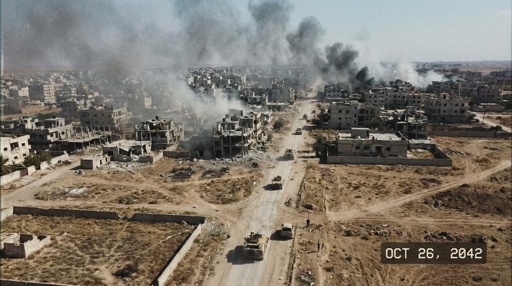
Israel has seized a 900-year-old castle deep inside Lebanon — and says it plans to stay — raising urgent questions about whether a “security operation” is quietly becoming a second occupation.
Story Snapshot
- Israeli forces captured Beaufort Castle in southern Lebanon, marking the deepest push into the country in over 25 years.
- Israel crossed the Litani River and declared a buffer zone, with officials saying troops will remain there indefinitely.
- More than one million Lebanese civilians have been displaced, and rights groups say the mass expulsions may be a war crime.
- Israel held Beaufort Castle for 18 years during a prior occupation — a history that makes many skeptical of “temporary” promises this time.
Israel Captures a Castle — and Crosses a Line
Israeli forces seized Beaufort Castle, a Crusader-era fortress in southern Lebanon, on June 1, 2026. Associated Press reported the move marked Israel’s deepest push into Lebanese territory in more than a quarter century.[6] The castle sits on a commanding ridge near the city of Nabatieh. Israeli Defense Minister Israel Katz called it “one of the most crucial strategic locations for safeguarding the settlements in the Galilee.”[1] Israeli Prime Minister Benjamin Netanyahu called the capture a “dramatic stage” in the country’s military posture along its northern borders.
The seizure came after Israeli forces crossed the Litani River — an unofficial boundary that had held since 2006. Israel then ordered all residents south of the Zahrani River, roughly 40 kilometers from the Israeli border, to evacuate and warned that anyone who stayed faced lethal risk.[3] The Israeli military designated the area between the Litani and Zahrani rivers a combat zone. Israeli officials said the operation aimed to dismantle Hezbollah’s military infrastructure and secure high ground close to the Israeli frontier.[3] Hezbollah, backed by Iran, continued fighting — reporting 19 separate operations against Israeli forces on a single Sunday, including drone strikes and rocket attacks on northern Israel.[4]
On the ground in Lebanon, the IDF is pressing to seize the strategic Ali al-Taher Ridge and the subterranean network beneath it. The IDF assesses the complex to be the “nerve center” of Hezbollah’s Badr Division – the formation regarded as the organization’s primary force on the…
— Drake Mariani (@DrakeMariani) June 21, 2026
Buffer Zone or Occupation? History Offers a Warning
Israel held Beaufort Castle from 1982 until its withdrawal from Lebanon in 2000 — an 18-year occupation.[6] That history is hard to ignore. In 1978, Israel launched what it called Operation Litani, advancing to the same river with the same stated goal: push armed groups back and create a security zone. That operation eventually produced a two-decade military presence. Now Israeli officials say forces will remain in seized areas “as part of a security zone in Lebanon,” with Katz adding that displaced Lebanese residents south of the Litani will not be allowed to return until northern Israel is considered safe.[1]
The language of a “buffer zone” versus “occupation” is doing a lot of work here. When officials say troops will stay and civilians cannot return, the distinction between the two starts to blur. CBS News national security analysts noted that southern Lebanon also holds significant water and natural gas resources, which some observers say makes the incursions “highly suspect as land grabs.”[24] Israel rejects that framing. But the pattern — advance, declare a security zone, stay for years — has played out before in this exact geography.
Over a Million Displaced — Rights Groups Call It a Possible War Crime
The humanitarian toll is severe. TIME reported that Israeli bombing and evacuation orders displaced more than one million people across southern Lebanon, the Bekaa Valley, and Beirut’s southern suburbs.[11] The International Commission of Jurists said Israel’s blanket displacement orders affected roughly eight percent of Lebanese territory and caused “severe panic, upheaval, and homelessness.”[12] The group stated that forcible transfer without clear military necessity is prohibited under international law and can rise to the level of a war crime.[12] Human Rights Watch reached the same conclusion, calling Israel’s displacement of Lebanese civilians a possible war crime.[14]
Israel argues that every action targets Hezbollah infrastructure, not civilians. Amnesty International documented that Israeli forces found tunnels, weapons caches, and Hezbollah command nodes in some southern Lebanese structures.[17] But independent verification of which specific sites were military targets — and which were civilian homes — remains limited during active combat. The violence has killed at least 3,350 people in Lebanon.[18] Lebanon’s president ordered the army to confront Israeli incursions for the first time under the current government, a sign of how far the situation has escalated.[23] Peace talks brokered by the United States were underway in Washington, but Hezbollah dismissed them while Israeli operations continued.[4]
What Both Sides of the American Debate Should Know
This conflict does not fit neatly into a left-right frame. Supporters of Israel point to real and documented Hezbollah attacks on Israeli civilians and soldiers, and to the genuine strategic value of holding high ground like Beaufort Castle.[2] Critics point to a pattern that has repeated itself since 1978: Israel announces limited, targeted operations, crosses the Litani, declares a security zone, and stays for years. The current operation is already the longest of Israel’s wars in Lebanon by some measures.[22] More than a million people are displaced. A ceasefire exists on paper but has been breached repeatedly.[21] Whatever your politics, the gap between what officials say and what is happening on the ground deserves close attention.
Sources:
[1] Web – Lebanon, the New Gaza
[2] Web – Why Israel’s Beaufort Castle seizure is historically and strategically …
[3] Web – Israel captures Beaufort Castle in Lebanon – The Times of India
[4] Web – What is Lebanon’s Beaufort Castle, and why has Israel captured it?
[6] YouTube – Why Israel’s capture of Lebanon’s Beaufort Castle matters
[11] Web – What is Beaufort Castle, why does it matter strategically – Instagram
[12] Web – One Million People Displaced in Lebanon as Israel Launches … – TIME
[14] Web – Operation Litani | IDF
[17] Web – 1978 South Lebanon conflict – Wikipedia
[18] Web – Fears of an all-out Israeli invasion mount in Lebanon – NBC News
[21] Web – Forcibly displaced Lebanese families began returning to towns in …
[22] Web – Israel’s extensive destruction of Southern Lebanon
[23] Web – Israeli army captures strategic castle in Lebanon in deepest … – CBC
[24] Web – Israeli army expands ground incursion in southern Lebanon amid …