

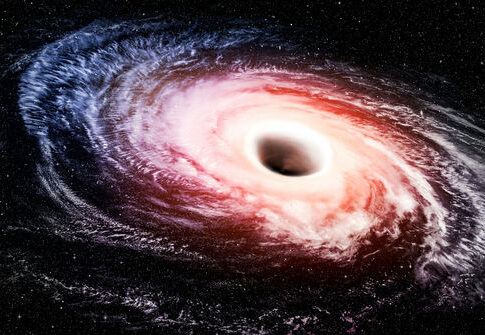
Deep space harbors a galaxy sprouting tentacles 8.5 billion years old, forcing astronomers to rethink the universe’s violent youth.
Jellyfish Galaxies Defined by Cosmic Ramming
Dr. Ian Roberts’ team spotted COSMOS2020-635829 in JWST data from the COSMOS field. This sky patch offers clear views with minimal Milky Way dust and bright stars. The galaxy shows a symmetric stellar disk and a southern tail with four bright blue knots. These knots mark newborn stars forming in stripped gas. Ram-pressure stripping occurs as the galaxy plows through hot intracluster medium in a dense cluster. Cluster gas rams the infalling galaxy’s gas, ejecting it into tentacles.
Discovery Process in JWST COSMOS Observations
James Webb Space Telescope launched in 2021. Researchers targeted COSMOS data for undocumented jellyfish galaxies. Roberts, Banting Postdoctoral Fellow at Waterloo Centre for Astrophysics, led analysis. Co-authors Michael L. Balogh, Visal Sok, Adam Muzzin, Michael J. Hudson, and Pascale Jablonka modeled spectroscopy. Gemini Telescope confirmed tail knots. The paper “JWST Reveals a Candidate Jellyfish Galaxy at z=1.156” appeared in The Astrophysical Journal, 2026, Volume 998, Issue 2.
Timeline from Data to Publication
JWST gathered COSMOS observations pre-2026. Early 2026 data search yielded the candidate. February saw preprint reviews. March 3 brought ApJ publication and University of Waterloo press release. Roberts stated, “Early on in our search… we spotted a distant, undocumented jellyfish galaxy that sparked immediate interest.” Team now seeks more JWST time. Candidate status awaits full tail gas ionization confirmation.
Why This Galaxy Rewrites Early Universe History
Prior jellyfish examples sat closer, at lower redshifts, observed by Hubble. JWST’s infrared pierces cosmic dust for high-z views. This z=1.156 find, 8.5 billion light-years distant, proves ram-pressure stripping acted when universe was 5.4 billion years old. Models assumed sparser, immature clusters then. Facts align with common sense: robust data from peer-reviewed ApJ trumps speculation. Violent proto-clusters formed stars in tails, quenching disks faster.
🔬 James Webb spots a galaxy with tentacles in deep space
# Analysis: A Window Into Cosmic Violence
The identification of a jellyfish galaxy at this extreme distance—8.5 billion light-years—fundamentally reshapes our understanding of when large-scale structure formation became…
— prometheus (@prometheusUFX) March 3, 2026
Implications for Galaxy Evolution Models
Short-term, discovery spurs JWST follow-ups on proto-clusters. Long-term, it reshapes timelines for cluster assembly and star formation quenching. Blue knots verify extraplanar starbirth predictions. Astronomy community revises simulations. Boosts JWST funding via tangible cosmology advances. Informs Roman Space Telescope targets. Clarifies 30% of universe’s matter in intracluster medium. Consensus holds on validity despite candidate label.
Sources:
James Webb spots a galaxy with tentacles in deep space
University of Waterloo: JWST reveals candidate jellyfish galaxy at z=1.156
Sci.News: JWST Discovers Most Distant Jellyfish Galaxy
Universe Today: Another Early Universe Surprise From The JWST
The Debrief: James Webb Space Telescope Discovers an 8.5 Billion-Year-Old Jellyfish Galaxy
Phys.org: Astronomers link galaxy evolution
SciTechDaily: Why Does This Galaxy Have Tentacles?
Charlotte Observer: Astronomers Spot Jellyfish Galaxy With Tentacle-Like Gas