

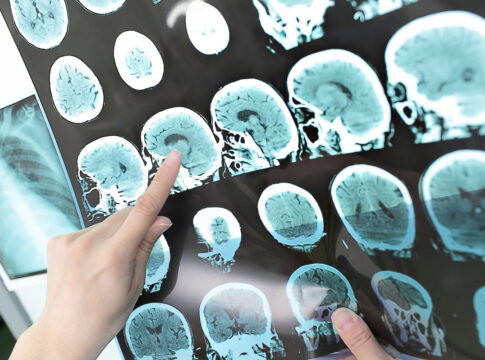
AI now diagnoses brain MRIs in seconds with 97.5% accuracy, potentially saving countless lives by flagging strokes and hemorrhages before doctors even arrive.
University of Michigan’s Breakthrough AI Model
University of Michigan Medicine researchers developed an AI model that reads brain MRIs in seconds and diagnoses neurological conditions with 97.5% accuracy. This system predicts urgency for cases like strokes, traumatic brain injuries, and hemorrhages. It processes scan slices rapidly, auto-generates reports, and integrates with hospital PACS systems. Doctors receive mobile alerts for critical findings, enabling immediate action. Traditional reads take minutes; this compresses that to seconds, aligning with conservative values of efficiency and life-saving pragmatism.
Hyperfine’s Portable MRI Revolutionizes ER Triage
Hyperfine Inc. received FDA clearance on January 20, 2026, for a software update to its Swoop portable MRI system. This low-field device detects strokes and small lesions at the bedside, using the largest dataset for such portables. Studies in Stroke-Vascular Neurology confirm high sensitivity in emergency settings. ERs overwhelmed by data deluge gain preliminary triage during scans. Portable tech extends precision diagnostics to underserved areas, embodying common-sense innovation over bureaucratic delays.
UCSF researchers under Reza Abbasi-Asl enhanced 3T MRIs to 7T quality in October 2024, improving TBI and MS lesion visibility. This synthesis model overcomes limits of rare high-field machines, expanding access without massive infrastructure costs.
Harvard’s BrainIAC Predicts Risks from Routine Scans
Benjamin Kann’s team at Harvard/Mass General Brigham unveiled BrainIAC in February 2026. Trained on 49,000 scans, it extracts brain age, dementia risk, and survival predictions from standard MRIs. This foundation model outperforms specialized tools, signaling a shift to proactive care. ERs benefit from multi-risk flagging alongside acute diagnostics. Facts support its promise, though long-term multimodal integration remains unproven.
MIT/Harvard/MGH developed AI for brainstem white matter segmentation, resolving prior imaging limits in vital areas. These advances collectively address emergency bottlenecks like off-hours volume and cognitive fatigue.
Stakeholders Driving AI Integration
Tech firms like Hyperfine partner with academics at Michigan and UCSF for validation. FDA clearances enable deployment, while clinical leaders like Abbasi-Asl and Kann push adoption. Payers such as National Government Services propose Medicare denials for AI-MRI exams, prioritizing cost control over innovation. ACR influences policy amid this tension. Radiologists view AI as partners, offloading routine reads to focus on complex cases—a practical evolution grounded in evidence.
Short-term gains include reduced intervention times via hemorrhage alerts. Long-term, synthetic imaging and risk prediction foster evidence-based care. Patients in high-volume ERs and remote areas stand to benefit most, countering social inequities through technology.
Sources:
PMC Article on AI in Emergency Radiology
UCSF News: Enhancing MRI with AI for Brain Disorders
Harvard Gazette: New AI Tool Predicts Brain Age, Dementia Risk
Medical Economics: Portable MRI for Strokes in ERs
EV Today: Hyperfine Swoop for Stroke Detection
Medical Xpress: AI for Brainstem Tracking
Inside Precision Medicine: AI Reads Brain MRIs in Seconds
Michigan Medicine: AI Diagnoses Brain MRI in Seconds
AuntMinnie: NGS Proposes Denying Medicare for AI-MRI
ITN Online: Hyperfine FDA Clearance for Portable MRI