

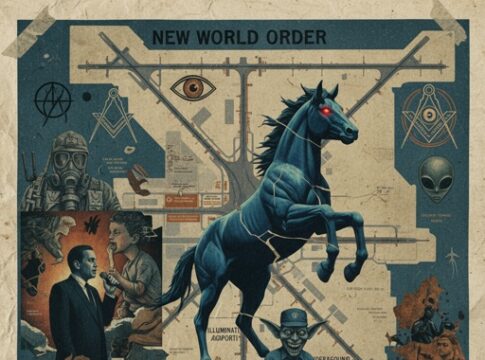
Secret societies have shaped American history from the shadows, with our Founding Fathers themselves members of organizations that modern globalist elites desperately want to control or eliminate.
Founding Fathers Built America Through Brotherhood
George Washington, Benjamin Franklin, and countless other patriots who forged our nation were proud Freemasons who understood that strong fraternal bonds protect liberty from tyrannical forces. The Freemasons evolved from medieval stonemason guilds into a global network dedicated to moral development and mutual aid. Their lodges became meeting grounds where revolutionary ideas about individual rights and limited government flourished, directly contributing to the birth of our constitutional republic and the defeat of British oppression.
The Grand Lodge of England formalized Freemasonry in 1717, but American lodges quickly adapted these principles to serve the cause of freedom. These societies provided protection and advancement opportunities for members who shared common values about self-reliance, moral character, and resistance to government overreach. Unlike today’s globalist networks that seek to undermine national sovereignty, historical secret societies strengthened the bonds between patriots fighting for American independence and constitutional principles.
Ancient Roots Prove Human Need for Sacred Traditions
Secret societies trace their origins to ancient mystery religions in Egypt, Greece, and Rome, demonstrating humanity’s eternal need for sacred traditions and exclusive brotherhoods. These early organizations used ritual secrecy to preserve knowledge, foster group identity, and maintain values against outside corruption. The Knights Templar emerged in medieval Europe as a Christian military order, protecting pilgrims and accumulating wealth through disciplined service to higher principles rather than government handouts or socialist redistribution schemes.
The Bavarian Illuminati, founded by Adam Weishaupt in 1776, initially sought to promote Enlightenment ideals but was rightfully suppressed by authorities in 1784 when its subversive agenda became clear. Unlike the patriotic Freemasons who built America, the Illuminati represented the kind of intellectual arrogance and revolutionary fervor that threatens established order and traditional values. Bavarian authorities recognized the danger and eliminated this threat within a decade, though conspiracy theories about its survival continue to distract from real centers of power.
Modern Attacks Mirror Historical Government Overreach
Today’s secret societies face the same pressures that have always threatened voluntary associations: government demands for transparency, media attacks on tradition, and elite efforts to control or eliminate independent organizations. The Freemasons published their first annual report in 2021, responding to mounting pressure for openness from the same forces demanding government oversight of churches, gun clubs, and patriotic organizations. This represents a dangerous precedent where private associations must justify their existence to hostile authorities who despise traditional American values.
The historical suppression of secret societies reveals a pattern of government overreach that should alarm every freedom-loving American. The French crown destroyed the Knights Templar in 1307 to seize their wealth, while the Pope condemned Freemasonry in 1738 because it promoted individual liberty over institutional control. These attacks mirror today’s assault on conservative organizations, showing how power-hungry elites have always targeted groups that foster independence, self-reliance, and resistance to tyranny among ordinary citizens.
Sources:
6 Illuminating Facts About Secret Societies
Freemasonry – George Washington’s Mount Vernon
Secret Societies – The Standard