

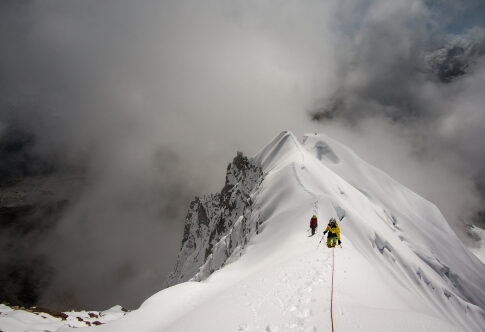
By 2100, the Alps could lose 99% of their 3,000 glaciers under current warming policies, leaving just 20 survivors amid a global tally plummeting from 200,000 to as few as 18,000.
ETH Zurich Study Unveils Peak Glacier Extinction
ETH Zurich researchers published their comprehensive study in December 2025, projecting glacier survival to 2100 across four warming scenarios: +1.5°C, +2.0°C, +2.7°C, and +4.0°C. Three global models tracked individual glaciers from a 2025 baseline of ~200,000 worldwide. Alps hold ~3,000 today; Rockies ~18,000; Andes and Central Asia dominate counts. Peak annual losses hit 2,000 glaciers in 2041 at +1.5°C, escalating to 4,000 by 2055 at +4°C. Alps peak arrives earliest, 2033-2041.
Regional Vulnerabilities Expose Harsh Realities
Alps glaciers face extinction fastest due to smaller sizes. At +1.5°C, ~430 survive (12%); +2.0°C drops to 270 (8%); +2.7°C (current policies) leaves 110 (3%); +4.0°C spares just 20 (1%). Global survivors range from 100,000 at +1.5°C to 18,000 at +4.0°C. Rockies and Andes fare better initially, but all regions hit peaks post-2040s. Smaller glaciers disappear even under low emissions, aligning with IPCC precedents.
Historical Retreat Accelerates to Crisis
Glaciers store 70% of global freshwater and served as climate sentinels until human-induced warming accelerated retreat since the 1980s. IPCC’s 2019 report forecasted 22-44% mass loss by 2100 under low emissions, surging to 37-57% under high. ETH shifts focus to counts, revealing worse prospects for fragmented remnants. WMO warned in March 2025 of 80% small glacier loss in Europe, Africa, Indonesia by 2100 if trends persist.
Stakeholders Drive Urgency for Action
Daniel Farinotti, ETH glaciology professor, co-authored the study and stressed every tenth of a degree counts. Farinotti stated results demand ambitious climate action. WMO’s Sulagna Mishra highlighted unprecedented melt speeds risking millions. IPCC authors laid mass-loss groundwork; international modelers provided data. Policymakers at COP processes control emissions paths trending toward +2.7°C despite Paris +1.5°C goals. Common sense aligns with Farinotti’s facts: precise control yields outsized survival gains, favoring pragmatic policies over vague promises.
Peak losses strain short-term water supplies and tourism by 2041-2055. Long-term, 18,000-100,000 remnants challenge adaptation for hundreds of millions dependent on meltwater in Alps tourism, Andes farming, Asian rivers. Water scarcity hits fisheries, hydropower, agriculture; sparks displacement and emissions-cut pressures. Rhône and Aletsch glaciers exemplify tourism threats as water sectors reel.
Expert Consensus with Conservative Lens
Farinotti notes peak losses double from +1.5°C to +4°C, with small shifts critically impacting survival. IPCC confirms over 80% mass loss in vulnerable regions regardless of scenario. WMO echoes 80% small glacier vanishings. ETH innovates by counting individuals, complementing IPCC mass focus—fragments persist but cease as glaciers. Uncertainties tie to policy emissions; +4°C holds ~5% odds. Facts support measured skepticism: models assume trajectories, yet American conservative values prize data-driven realism over alarmism, urging innovation alongside conservation.
Sources:
Phys.org: Alps to lose record number of glaciers in next decade
IPCC Special Report on the Ocean and Cryosphere
ScienceDaily: The Alps to lose a record number of glaciers
UN News: Glaciers melting at unprecedented speed
Smithsonian: How Many Glaciers Will Survive Until the End of the Century?