

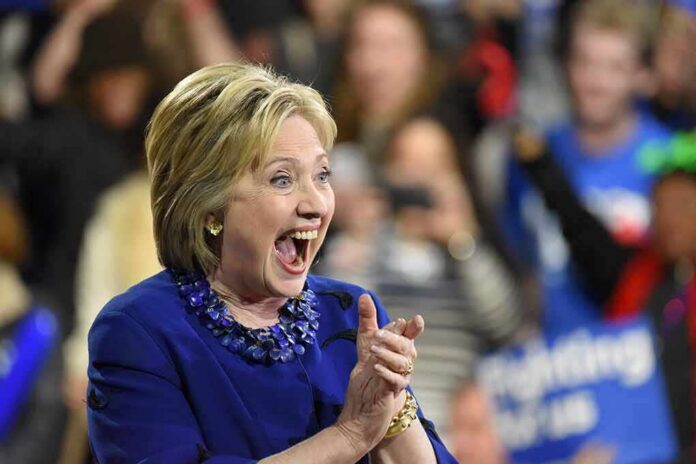
Hillary Clinton’s attack on President Trump over press access drew a swift Community Note pointing to her own record on Julian Assange and past rhetoric about the media.
Story Highlights
- Clinton posted that “kicking out the free press” is what “fragile authoritarians” do.
- Community Notes users flagged her past comments on Julian Assange and press freedom.
- Clinton in 2019 said Assange “has to answer for what he has done,” not “punishing journalism”.
- Clinton has also publicly championed internet and press freedoms as secretary of state.
Clinton’s Post Sparks Backlash Over Press-Freedom Consistency
Hillary Clinton posted on September 24 that “kicking out the free press is what fragile authoritarians do,” casting that conduct as un-American. The post came as media debates raged about access and the role of accountability reporting. Soon after, Community Notes users added context highlighting Clinton’s own record on press freedom and her long, public dispute with WikiLeaks founder Julian Assange, turning her shot at Trump into a wider fight over credibility and standards.
Critics argued the note was fair because Clinton had drawn stark lines against Assange in the past. Supporters countered that she separated alleged criminal hacking from journalism, which is different than removing reporters from events. The argument grew online as users shared old interviews and past quotes. The exchange shows how fast platform tools can flip a narrative, especially when prior statements are clear, accessible, and easy to frame as hypocrisy in a short post.
What Clinton Has Said About Assange And The Media
In 2019, after British authorities arrested Assange, Clinton said “the bottom line is he has to answer for what he has done.” She also said the case was not “about punishing journalism,” but about aiding the hacking of a military computer to steal government data. Coverage at the time echoed that framing, stressing her claim that charges focused on conduct, not reporting. She had earlier labeled Assange “a tool of Russian intelligence” in 2017, sharpening the divide with his defenders.
Clinton’s public record also includes statements that defend free expression and condemn harassment. As secretary of state in 2010, she spoke against the detention and intimidation of bloggers, religious figures, and others who spoke out online. She tied American leadership to an open internet and to resisting censorship and abuse by governments. That history complicates a simple hypocrisy label, because it shows she has at times promoted free speech principles while attacking Assange’s conduct as outside journalism.
Where The Community Note Lands And What It Misses
The Community Note highlighted the gap between Clinton’s claim about “authoritarians” and her sharp rhetoric about Assange. The note drew strength from on-record quotes that are not in dispute, which is why it resonated with many readers. However, available records in this research do not include a primary-source platform capture of the exact Community Note or verify harsher paraphrases attributed to Clinton by some outlets, which limits how far the claim can be pushed on specifics.
That gap matters because precise wording changes public judgment. Critics see a straight line from her attacks on Assange to a double standard on press rights. Others reply that barring reporters from events is different from charging someone with aiding a hack. Without the actual note text and full context of her recent post, the debate risks turning into memes instead of facts, and the finer legal and constitutional points get lost in the noise.
Why This Fight Matters To Readers Who Value Liberty
Conservatives care about equal rules, fair process, and the Constitution. When a leading Democrat calls out “authoritarians,” but her own words invite questions, that strikes people as a familiar double standard. The First Amendment protects a free press. Due process also matters when the government manages access. Clear lines and consistent standards prevent power from sliding into viewpoint punishment. That is why accuracy about what was said, done, and proven is essential to trust.
🚨 LMFAO! Hillary Clinton tried going after President Trump and got pummeled by Community Notes AGAIN
HILLARY: "Kicking out the free press is what fragile authoritarians do. Not American presidents!"
NOTE: "Hillary Clinton banned a reporter from her NH events." 💀
Nobody likes… pic.twitter.com/QpUM2v5Ysf
— MR X (@TheMrXGuy1) September 27, 2026
Readers should keep two truths in view. First, politicians who police speech should live by the same rules they demand of others. Second, platform notes can help, but they must rest on precise, sourced language, not viral spin. Clinton’s record shows both pro-speech statements and hard lines against Assange’s alleged crimes. Her post invited a reckoning with that mixed history. Facts, not slogans, are the way to guard free speech and hold leaders to the same standard they apply to opponents.
Sources:
twitchy.com, wnd.com, thegatewaypundit.com, cnn.com, theguardian.com, ground.news