
Five adults died in front of their children in an Ohio river, raising hard questions about water safety and government priorities.
Story Snapshot
- Five people drowned in the Scioto River near Columbus after a rescue attempt turned into a chain tragedy.
- Two women died Sunday night and three men were recovered Monday, leaving two young children without their parents.
- The group had no boat, no lifeguard, and unclear safety protections at a popular public fishing spot.
- Media rushed to blame “bad choices” while officials said little about known hazards and missing safeguards.
Families Lost In Seconds On A Quiet Sunday Evening
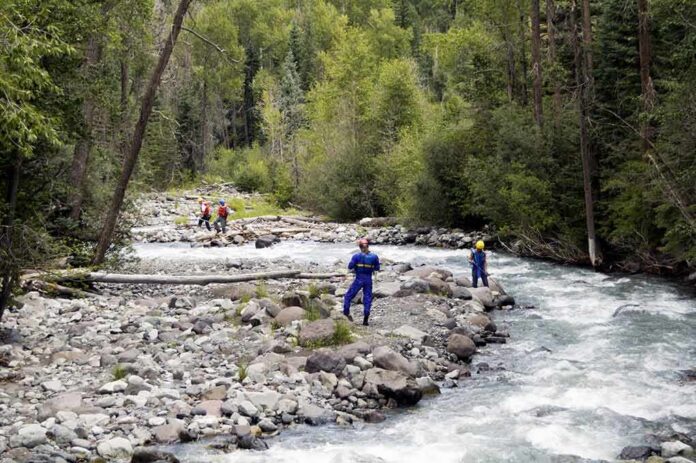
On a warm Sunday night along the Scioto River in Powell, Ohio, a family outing turned into a nightmare that cannot be undone. Authorities say the group was gathered at a popular fishing area near the O’Shaughnessy Reservoir when one person went into the river to swim and began to struggle in the water. Several adults rushed in to help, but they also ran into trouble with the current and depth. Within minutes, five adults would be gone, and two young children would be left behind.
Delaware County Sheriff Jeffrey Balzer explained that one person entered the river, then others followed to try to rescue them as the situation spiraled. A frightened child from the group ran up to a nearby road, where a passing driver saw his panic and called 911 to report that the child’s family was in the river. Rescue crews worked through the night. Two women were pulled from the water Sunday and were pronounced dead at local hospitals. The search continued into Monday as dive teams swept the river for the missing men.
How The Chain Drowning Unfolded And What We Know So Far
By Monday afternoon, law enforcement confirmed that three men’s bodies had been recovered from the Scioto River, completing a grim count of five victims from the same outing. Sheriff Balzer said the group appeared to include two sets of parents, two children, and other relatives or friends gathered at the river’s fishing area. Two children under the age of ten are now in the care of family services, their lives changed forever by a few horrible minutes in the water. Officials have not yet released the names of the victims or detailed autopsy findings.
Authorities say there was no boat at the scene and still do not know whether alcohol played any role, leaving key questions open. This stretch of the Scioto River is a public access spot near a major reservoir, used often for fishing and informal swimming. Yet reports so far do not mention lifeguards, warning buoys, or clearly posted signs about sudden drop-offs or strong currents. Water safety experts describe events like this as “chain drowning,” where untrained rescuers jump in and are pulled under themselves, a pattern they say accounts for a notable share of recreational drownings nationwide.
Media Blame Families While Officials Dodge Safety Responsibility
National and local outlets moved quickly to frame the story as parents rushing into the water and tragically “all drowning,” turning the focus onto individual decisions within twenty-four hours. That storyline fits a familiar pattern where regular people get blamed for “dumb” rescue attempts while government agencies face little pressure to explain hazards at public recreation sites. In this case, the investigation is still active, and officials openly admit that they do not yet know the full causes, including possible impairment. Yet the quick moral narrative has already hardened in headlines.
📰 Ohio River Incident Overview:
Five individuals died in the Scioto River near Powell, Ohio, after multiple adults entered the water attempting to rescue a struggling swimmer.🌊 Sequence of Events:
– A group had gathered along the Scioto River on Sunday. One adult entered…— Washington Report (@Washington_Rep) July 20, 2026
For constitutional conservatives who believe in personal responsibility and limited but competent government, this raises deeper issues. Families should be able to use public rivers and fishing areas without walking blind into deadly conditions that were known but not clearly marked. When five adults die in one incident, the question is not only “why did they go in,” but also “what did state and local authorities do in advance to protect life and inform citizens.” So far, there is no public record of specific safety warnings, barriers, or rescue gear at this exact location.
Where Accountability And Solutions Need To Go Next
Going forward, real answers will depend on full autopsy and toxicology reports, detailed maps of the river’s currents, and records of past incidents at this fishing area. Freedom of Information Act requests to the Delaware County Sheriff’s Office and Ohio health and natural resources agencies could reveal if officials knew about hidden drop-offs, strong currents, or repeated rescues before this tragedy. If they did, yet failed to upgrade signs or place throw ropes and life rings, that is a policy failure, not just a family mistake. Citizens deserve to see those records.
Water safety groups already warn that many drownings begin with one person in trouble and end with multiple deaths when untrained rescuers jump in without flotation gear. Simple, low-cost steps can save lives: bold warning signs about currents, clear “do not swim” postings at risky spots, and basic rescue tools at popular access points. Under the current Trump administration, which campaigned on putting American families first, conservatives can push state and local leaders to stop hiding behind vague statements and start fixing dangerous public sites before more parents and children pay the ultimate price.
Sources:
nypost.com, theguardian.com, foxnews.com, youtube.com, abc6onyourside.com