

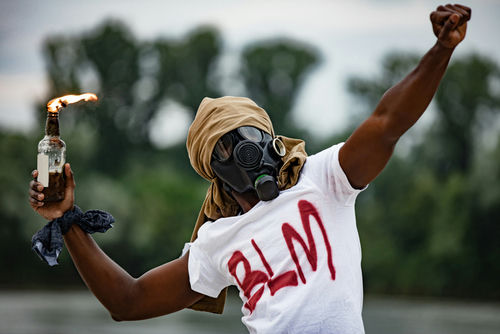
A former Black Lives Matter activist has turned his back on the movement entirely, calling it a “scam” and declaring that systemic racism in America is a myth perpetuated by those profiting from division.
From Believer to Critic
Xaviaer DuRousseau spent years promoting Black Lives Matter’s ideology, posting videos about segregation, lynching narratives, and calling for racial dialogue across America. His social media presence reflected the passionate activism that surged after George Floyd’s death in 2020. However, personal experiences and extensive travel led him to fundamentally reassess these beliefs. In a candid YouTube video that has circulated widely in conservative circles, DuRousseau reacts to his own past content with visible discomfort, labeling his former views as naive and misguided. His transformation represents a growing trend of individuals, particularly within the Black community, publicly rejecting progressive orthodoxy on race.
Rejecting the Systemic Racism Framework
DuRousseau draws a critical distinction that challenges contemporary progressive discourse. He acknowledges that “circumstantial racism exists” through individual prejudiced actions but firmly denies that systemic racism operates in modern America. Recounting a road rage incident where he faced racist slurs, he emphasized the perpetrators were special needs individuals acting from ignorance rather than representatives of oppressive institutional structures. This perspective aligns with economists like Harvard’s Roland Fryer, whose research found no evidence of systemic police bias, and scholars like Thomas Sowell who have long argued that interpersonal discrimination differs fundamentally from embedded institutional racism. Such data-driven analysis contradicts narratives promoted by activists who benefit from perpetuating victimhood frameworks.
BLM’s Credibility Crisis
The Black Lives Matter Global Network Foundation faces mounting evidence of financial mismanagement that validates DuRousseau’s “scam” characterization. After raising over ninety million dollars in 2020, the organization purchased a six million dollar property while providing unclear accounting for how donations served Black communities. IRS audits revealed over eight million dollars in questionable expenses, leading co-founder Patrisse Cullors to resign in 2021 amid controversy over her personal real estate purchases. By 2023, tax filings showed only 3.5 million dollars in assets despite the massive fundraising, with local BLM chapters suing the national organization over withheld funds. This pattern of opacity and alleged grift undermines the movement’s stated mission while enriching leadership—a reality that ordinary Americans working hard to support their families understandably find offensive.
Broader Implications for National Discourse
DuRousseau’s defection signals shifting public opinion on racial grievance politics that transcends traditional partisan divides. Gallup polling from 2023 revealed that fifty percent of Black Americans doubt ongoing discrimination significantly impacts their lives, while Pew Research found forty percent of all Americans perceive less racism than before 2020. These numbers suggest the “racial reckoning” narrative is losing traction as economic pressures make abstract social justice causes feel disconnected from daily struggles. Conservative media has amplified DuRousseau’s message, positioning him alongside figures like Candace Owens and Coleman Hughes who advocate focusing on class and individual agency rather than systemic oppression. Meanwhile, progressive activists dismiss such voices as grifters, yet offer little substantive response to the financial scandals or data challenging their frameworks.
The Cost of False Narratives
The implications extend beyond one activist’s personal journey. Diversity, equity, and inclusion initiatives have consumed billions in corporate and government spending based partly on premises DuRousseau now rejects. Reparations proposals gain less momentum when influential Black voices question whether systemic racism justifies wealth transfers. Academic institutions face scrutiny for promoting theories that scholars like John McWhorter characterize as quasi-religious rather than evidence-based. For Americans across the political spectrum frustrated with elites who seem more interested in virtue signaling than solving real problems—crumbling infrastructure, unaffordable housing, failing schools—the BLM saga exemplifies how those in power exploit division for profit. Whether DuRousseau’s critique represents genuine evolution or opportunism, his message resonates because it speaks to widespread skepticism about movements that demand allegiance while delivering questionable results.