

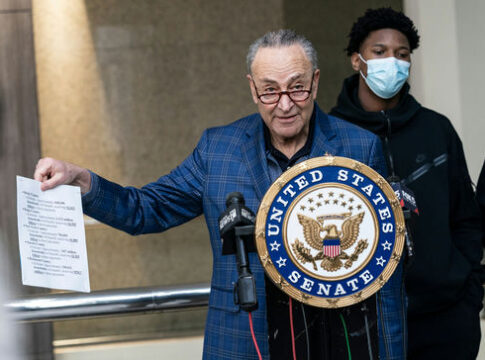
Chuck Schumer once warned that illegal immigration was fueled by fraud against jobs and benefits—then Washington spent decades refusing to lock down the very documents that make that fraud possible.
Watch the video.
What Schumer Said in 1996—and Why the Clip Is Circulating Again
Chuck Schumer’s 1996 remarks came during a House debate on immigration enforcement and fiscal responsibility provisions, including an anti-fraud amendment targeting Social Security cards. In the clip, Schumer backs an approach to make the cards harder to tamper with, framing it as a practical response to voters who asked why illegal immigration wasn’t being stopped. His answer centered on fraud, enabling illegal access to jobs and benefits.
The online resurgence in 2025 and into 2026 is less about nostalgia and more about receipts. The old argument sounds familiar to today’s voters, who have watched years of border chaos, wage pressure, and strain on the benefit system. The clip also matters because it captures a Democrat making a clear case for enforcement through verification—without pitching a sweeping new bureaucracy or a national ID system.
The Uncomfortable Policy Problem: Work Eligibility Without a “National ID”
The 1996 policy fight revolved around a real tension: Americans want illegal hiring to stop, but they do not wish for Washington to turn everyday paperwork into a de facto internal passport. The amendment Schumer supported was framed as a narrow anti-fraud measure—strengthening Social Security card security features to reduce tampering—rather than creating a new identity regime. That distinction remains central to constitutional and privacy concerns today.
Congressional materials from the mid-1990s show lawmakers wrestling with identity document fraud and verification concepts, including improvements tied to employment eligibility and access to benefits. The record also reflects how fears of “ID creep” repeatedly slowed action, leaving employers stuck with a compliance system that low-grade counterfeits could defeat. For conservatives, that’s the predictable result of government building half-systems: enough rules to burden citizens, not enough enforcement to stop lawbreaking.
IRCA’s Legacy: Employer Sanctions That Couldn’t Survive Cheap Counterfeits
The 1986 Immigration Reform and Control Act (IRCA) paired employer sanctions with legalization, betting that workplace enforcement would deter future illegal flows. But the enforcement side depended on documents that were easy to fake and on a verification process that was limited and inconsistent. Research summarized in the later analysis shows that counterfeit Social Security cards and other forged paperwork undermined the premise, leaving honest employers exposed and dishonest operators free to hire off the books.
That history helps explain why Schumer’s 1996 pitch was so focused on fraud-proofing the documents themselves. If the system easily accepts forged IDs, employer sanctions become performative: businesses either risk penalties for “wrong” paperwork calls or look the other way to keep staffing. The practical conservative takeaway is simple—law without workable enforcement is an invitation to more illegal activity and more executive-branch improvisation later.
From 1996 to Later Negotiations: Verification Upgrades Treated as a Sideshow
Later debate over E-Verify and broader immigration bills revived the same dispute: how to verify work eligibility at scale without turning the country into a checkpoint society. The provided research points to criticism that, during 2013 negotiations, stronger E-Verify-related improvements proposed by senators were sidelined while legalization and broader restructuring moved ahead. The clip’s resurgence highlights that the fraud concerns Schumer voiced in 1996 never disappeared; the policy follow-through did.
Based on the sources provided, the most defensible conclusion is not that one politician “changed,” but that Washington repeatedly failed to finish the job it admitted was necessary. Americans were told for decades that verification would be improved, fraud would be reduced, and the border would be brought under control—yet the same vulnerabilities kept returning in new forms. That cycle fuels today’s distrust and explains why enforcement-first policies resonate so strongly with Trump-era voters.
Why This Matters Under Trump’s Second Administration
With President Trump back in office in 2026, the political center of gravity has shifted toward enforcement, deterrence, and measurable compliance—especially in hiring and benefits eligibility. The 1996 Schumer clip is a reminder that even prominent Democrats once described illegal immigration as tightly linked to fraud against jobs and public systems. That framing aligns with the common-sense view that a sovereign country must know who is working, who is eligible, and who is cheating.
Still, the documents and debates cited here also underline a conservative red line: enforcement must not become an excuse for a permanent federal ID apparatus that treats law-abiding Americans like suspects. The question for the next phase is whether Washington can finally deliver secure, limited-purpose verification that stops fraud—without expanding government control over everyday life. The sources provided do not resolve that tradeoff, but they show the argument is decades old.