

When political activists decide Sunday worship is just another stage for their agenda, the Constitution’s promise of religious freedom collides head-on with mob tactics.
Two New Arrests Expand the Federal Case
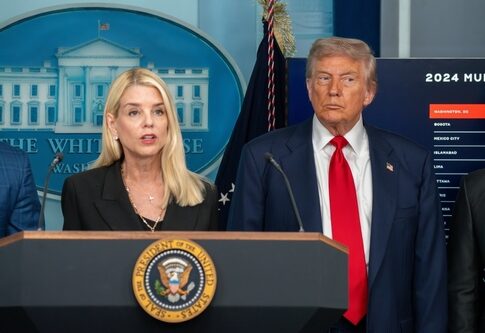
Attorney General Pam Bondi announced the arrests of Ian Davis Austin and Jerome Deangelo Richardson in connection with the disruption at Cities Church in St. Paul. The arrests expand a case that has moved in waves since late January and now involves nine individuals total. Federal officials have signaled the investigation is active and ongoing, emphasizing accountability for coordinated conduct rather than treating the event as a spontaneous protest.
The timeline described in reporting shows early arrests of alleged organizers tied to “Operation Pullup,” followed by additional arrests that included well-known figures. Authorities say the disruption involved a sizable group entering the church during a service. For many conservatives, the central question is straightforward: whether Americans can worship without being targeted and pressured because activists dislike a pastor’s day job or a federal policy.
What Happened at Cities Church, According to Reports
The incident occurred during a church service at Cities Church, where an ICE official serves as pastor—an overlap that made the church a symbolic target for anti-ICE activism. Reports describe 30 to 40 people storming in and chanting “ICE out,” interrupting worship and creating chaos in a setting that normally includes families and children. Congregants reportedly fled through side exits, and at least one person suffered a broken arm.
This matters beyond Minnesota because it tests a basic boundary in civic life: protest is not a license to commandeer private spaces, especially houses of worship, where Americans exercise a core constitutional right. The factual claims that congregants were frightened, services were interrupted, and someone was injured will weigh heavily as courts sort out whether the conduct crossed from speech into intimidation or obstruction.
How the FACE Act Is Being Used—and Why It’s Controversial
Federal prosecutors are using the FACE Act—passed in 1994—to pursue charges tied to interference with religious freedom at places of worship, along with other federal counts described in reporting. Critics of the prosecutions argue the law is being stretched into a political weapon, while supporters argue it is being applied exactly as intended: protecting people from force, intimidation, or obstruction when they try to exercise protected rights.
Conservatives who watched years of selective enforcement arguments under the prior administration will recognize the deeper issue: equal standards. If the law exists to protect access and worship without intimidation, then the law should apply regardless of the activists’ preferred cause. At the same time, the government still has to prove the elements of each charge, and the public record summarized in reports leaves some evidentiary details for court filings.
“Journalism” Claims Meet a Hard Legal Line
Don Lemon and Georgia Fort have said they were present in a journalistic capacity, not as participants. Lemon’s attorney has argued the case is an attack on the First Amendment, while Minnesota officials, including Attorney General Keith Ellison and St. Paul Mayor Kaohly Her, voiced concerns about chilling effects on journalism and protest coverage. Those are serious claims, but they depend on facts not fully laid out publicly yet.
The legal hinge point is participation versus documentation. Filming a protest is not the same as joining a trespass or coordinating a disruption, and courts generally examine behavior, intent, and coordination—not job titles. Reporting also notes uncertainty about how “journalist status” is verified in this case, and no single source summarized here provides comprehensive evidence distinguishing observers from actors. That limitation is likely why the fight is moving to federal court.
🚨 BREAKING — MORE ARRESTS: AG Pam Bondi announces 2 more leftists have been ARRESTED for storming the church in Minnesota
– Ian Davis Austin
– Jerome Deangelo RichardsonThe DOJ is NOT LETTING UP, let's go!
BONDI: "If you riot in a place of worship, we WILL find you." 🔥
Don… pic.twitter.com/8vbNLPypzX
— Eric Daugherty (@EricLDaugh) February 2, 2026
Why This Case Resonates With Voters in 2026
The case lands in a national climate shaped by backlash to years of permissive enforcement, political double standards, and cultural pressure campaigns. Under President Trump, the Justice Department is emphasizing order, border enforcement, and constitutional protections that include the free exercise of religion. That posture is popular with voters who felt their institutions were mocked—especially when activism becomes coercion aimed at ordinary families in a pew.
Still, constitutional rights do not cancel each other out. The First Amendment protects protest and the press, and it also protects religious exercise. The practical test is whether activists can express opposition without physically commandeering a service or creating fear and injury. As courts proceed, Americans should demand two things at once: evidence-based prosecutions and a clear reaffirmation that worship is not a permissible target for intimidation.
Sources:
Don Lemon faces federal criminal charges after anti-ICE protest disrupted Minnesota church
Federal agents arrest 2 more in connection to Minnesota church storming
Don Lemon, activists arrested disrupting church service