

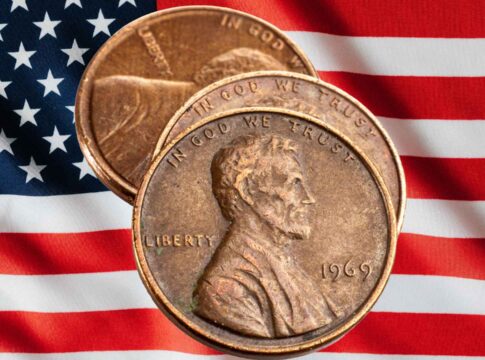
The humble U.S. penny is one of the most recognizable coins in the world. But for nearly two decades, it has cost the government more to make one than it’s actually worth. Now, after years of intense debate, the plug is finally being pulled on the one-cent coin.
The 3.69-Cent Problem
For 19 consecutive years, the U.S. Mint has been in a losing business. In 2024, the government reported that the cost to produce and distribute a single penny had reached 3.69 cents. This isn’t a small rounding error; it’s a massive financial drain that cost taxpayers $179 million in 2023 alone.
This staggering inefficiency is the core reason why, in February 2025, a presidential order was issued to officially cease production of the one-cent coin. In May 2025, the U.S. Treasury confirmed it was using its final batch of penny “blanks,” and production will end when supplies run out.
Why a Penny Isn’t Made of Copper
This wasn’t always a problem. The first U.S. penny, minted in 1793, was made of pure copper. But as the price of metals has risen, the penny’s composition has had to change just to keep it economical.
The most significant change happened in 1982, when the Mint switched the penny’s core from valuable copper to mostly zinc. Today’s penny is 97.5% zinc with just a thin copper plating. This was a cost-saving measure, but it wasn’t enough. The rising costs of zinc and the manufacturing process eventually caught up, making the coin a money-loser by 2006.
The Fight to “Save” the Penny
If the penny has been a money-loser for nearly two decades, why did it stick around so long? The answer is a mix of public nostalgia and powerful industrial lobbying.
Groups like “Americans for Common Cents” (an industry group) have long argued that eliminating the penny would lead to rounding “inflation” on prices. Furthermore, the zinc industry, including the major suppliers of the penny blanks, has lobbied Congress for years to keep the coin in production to protect its business.
Life Without the Penny
For Americans, the change will be small but noticeable. The U.s. Mint will no longer distribute new pennies. Soon, cash transactions will be “rounded” to the nearest five cents, a system that has already been successfully adopted in countries like Canada and Australia.
This move is unlikely to cause inflation, as most transactions are already electronic, and rounding up is balanced by rounding down. However, it does raise a new question. The penny isn’t the only coin in trouble—the U.S. Mint also reports that the nickel costs more to produce than its five-cent face value, making it the next likely target for retirement.