

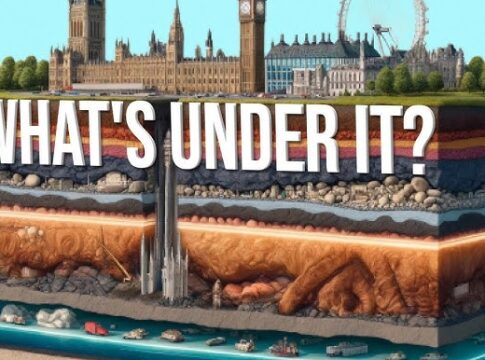
Revealing the astonishing secret just under London’s streets—a layer of ash and human remains that rewrites everything you thought you knew about the city’s foundation.
The Layer Beneath Our Feet: London’s Hidden Underworld
Beneath the thrum of double-deckers and the shimmer of glass towers, London’s core hides a literal graveyard of rebellion, fire, and imperial ambition. Every street, especially in the oldest quarters, rests on a foot-thick layer composed of ancient ash and human remains. This is not just the detritus of time—it’s the unmistakable signature of Boudica, Britain’s most fearsome rebel queen. Her revolt against the Romans left a mark so deep it’s visible to any archaeologist with a shovel, an eternal reminder that every empire, no matter how grand, is built on bones and ashes.
Modern Londoners walk above this ancient scar daily, oblivious to the physical evidence of massacre and renewal beneath their feet. That foot-thick band isn’t random—it records the moment when Boudica’s fury nearly erased the city, forcing the world’s most powerful empire to recognize the consequences of arrogance and oppression. This is not the sanitized history in glossy textbooks; it’s raw, unresolved, and quite literally buried just below the surface.
Claudius’s Wild Gamble: The Accidental Emperor and His Exotic Prize
In 43 AD, Roman Emperor Claudius, described by many as an “accidental” ruler, set his sights on Britain for reasons less noble than often claimed. Rome saw the island as mysterious, dangerous, and wholly cut off—a place as much legend as reality. Conquering it was a way for Claudius to transform his image from an afterthought into a force of destiny. The Romans didn’t just come for territory; they needed a story, and London would become its stage. Claudius’s calculated gamble paid off, but not without igniting a powder keg of local resistance that would haunt the empire for decades.
Londinium, as the Romans called their new outpost, wasn’t chosen at random. The north bank of the Thames offered the first reliable crossing point upstream—a military and trade jackpot. The construction of a wooden bridge around 50 AD didn’t just connect two sides of a river; it changed the trajectory of the entire settlement. The bridge became a physical and symbolic anchor, transforming a windswept patch of mud into a city that would outlast empires.
Boudica’s Legacy: A City Forged by Violence and Vision
Boudica’s uprising wasn’t a mere footnote; it was the event that nearly wiped London off the map. Her forces, driven by vengeance against Roman brutality, left behind that infamous layer of destruction—a line in the earth that divides before from after. For modern viewers, this story is a cautionary tale about the dangers of underestimating the oppressed and the unpredictable consequences of imperial overreach. The city that rose from these ashes wasn’t just rebuilt; it was reborn, forced to reconcile its dual identity as both a monument to conquest and a memorial to resistance.
London’s present grandeur stands on a foundation of violence and renewal. Every new skyscraper, every tube tunnel, slices through millennia of human ambition, tragedy, and survival. The lesson: beneath every great city lies a forgotten nightmare—and sometimes, a warning. The next time you stroll by the Thames, remember: beneath your feet is more than history. It’s a testament to the resilience—and the reckoning—that built a metropolis like no other.