

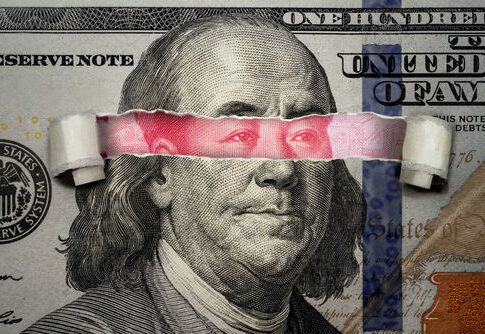
A $20 bill feels like a simple, everyday thing. Right now, it might get you a couple of coffees, a fast-food meal, or a few items for dinner. But that same piece of paper is also a time machine, and a quick trip to the past reveals just how radically its value has changed.
A Shopping Spree in the 1950s
Let’s set our first stop in the 1950s, an era well within living memory for many. With a $20 bill, you could treat a family to a nice holiday meal and still have plenty of change left over. It could buy several new clothing items or a full week’s worth of groceries for many households.
But here is the most stunning example: for around $20, you could have bought a dairy cow. That wasn’t just a simple purchase; it was a significant, productive asset that could provide fresh milk for a family. It’s a scale of purchasing power that is almost impossible to imagine today.
The Roaring Twenties and a Full Tank
Go back just a few decades more to the 1920s, and that $20 bill still held incredible power. This was an era of new consumer culture, and $20 let you participate in style. A man could walk into a department store and buy a brand-new, fashionable suit for under $20.
If you were one of the people embracing the new automotive age, $20 was a huge amount. It could fill up the gas tank of a new car—not just once, but as many as ten times over. It represented a level of freedom and mobility that was revolutionary for its time.
When $20 Could Buy the Farm
Let’s go even further back, to the early days of the United States. In the 1800s, a $20 bill had the purchasing power of over $500 in today’s money. It was a sum that could significantly alter a person’s life.
In the colonial era, the equivalent of $20 could do more than just buy a cow; it could buy a significant plot of land. This wasn’t a small garden plot; this was the foundational asset that could build a family’s entire future. That $20 represented the chance to own property, build a home, and create a livelihood.
The Not-So-Distant Past
You don’t even have to travel back a century to see a dramatic difference. Just think back to the year 2000. That $20 bill in your pocket had nearly double the purchasing power it has today.
It was the difference between a full cart of groceries and just a small basket. It could easily cover a casual dinner out, a new music CD with a magazine, or two tickets to a movie with snacks. It’s a slow, quiet change that has happened right in front of us.
So, What Happened to Our $20?
Why does a $20 bill buy less and less over time? The simple, one-word answer is inflation. Inflation is the slow, steady increase in the price of almost everything, from bread and milk to cars and houses.
It’s not that the $20 bill itself physically changed; it’s that the value of each dollar has been stretched thinner over the decades. This is a normal, expected part of how modern economies work. But seeing it through the lens of a single $20 bill makes the abstract concept of inflation feel sudden and very personal.
A Story in Your Pocket
The $20 bill in your wallet is more than just money. It’s a piece of living history. It tells a story of economic booms, global wars, and the quiet, persistent march of time.
While it may not buy a dairy cow or a plot of land anymore, it serves as a powerful reminder. It shows how much our world and our economy have changed. And it teaches us that the value of things—from a plot of land to a cup of coffee—is never really set in stone.
It’s the wages stupid! The more you make the more things cost because it cost more to get it to you because the wages were increased!
Greed, overpricing what our labor is really worth, wanting more instead of being content with what we have and are, allowing our leaders to pay for their lifestyles, “keeping up with the Jones’s”, all of these and more is why life cost more. Nothing wrong with wanting to better ourselves but the betterment shouldn’t cost our contentment with life.